 BIRCH COVE BUILDERS
Interior trim and millwork.
Trim is what makes a house feel finished. Here's what each piece is called, the common styles, and painted versus stained.
What each piece of trim is called
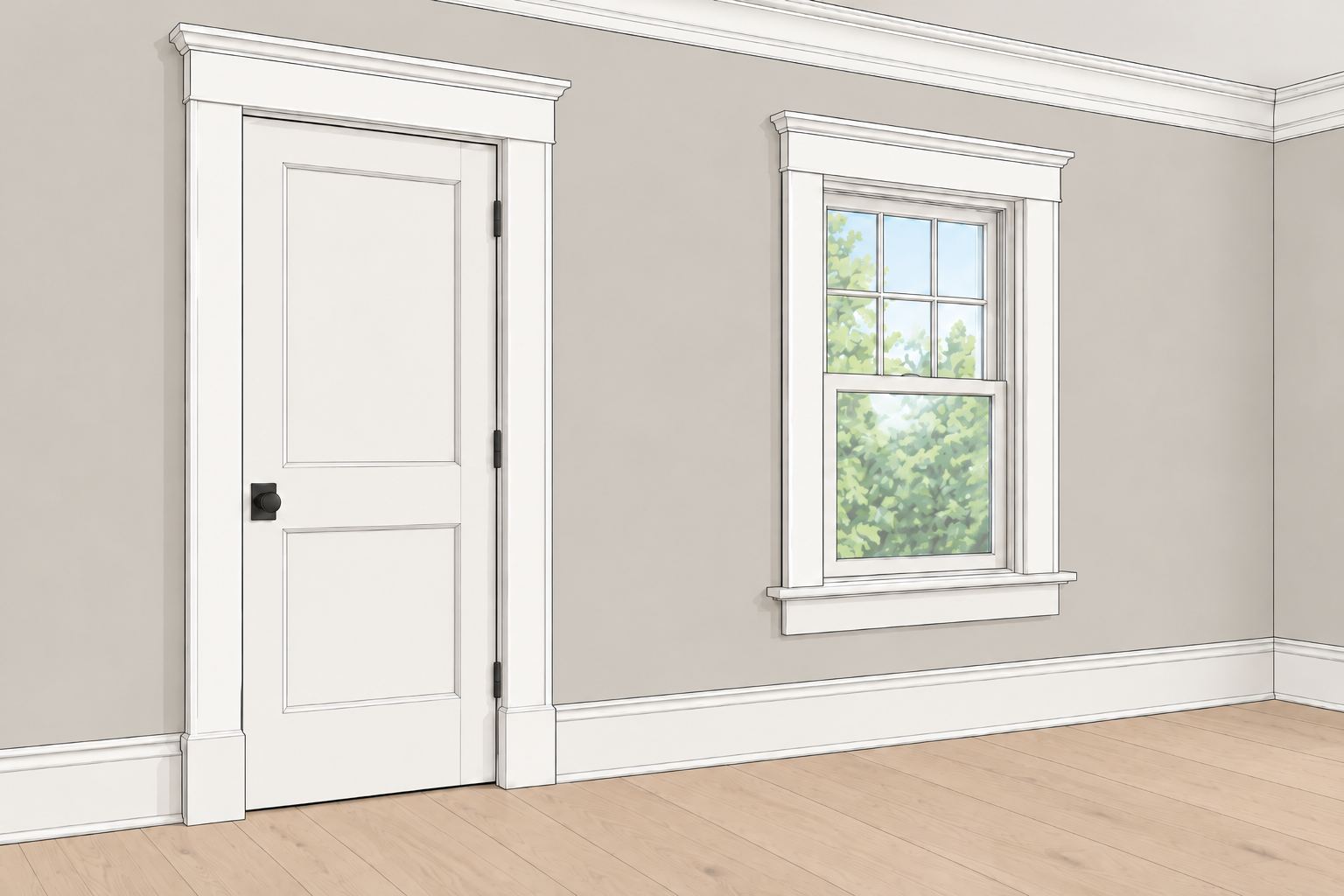
Jamb
The frame lining a door or window opening. The door hangs on it.
Casing
The trim around a door or window that covers the joint between jamb and wall.
Head casing
The top piece of casing, matching the sides or built up with its own cap.
Back band
A small molding around the outer edge of the casing that adds depth and a shadow line.
Plinth block
A block at the bottom of door casing where the baseboard stops.
Window stool and apron
The stool is the interior ledge at the bottom of a window. The apron is the trim piece below it.
Baseboard
Trim along the bottom of the wall that covers the floor gap.
Base cap and shoe molding
A cap is a small molding on top of a flat baseboard. Shoe is a thin strip at the floor that hides gaps.
Crown molding
Trim where the walls meet the ceiling, one piece or built up from several.
Stair parts and railings
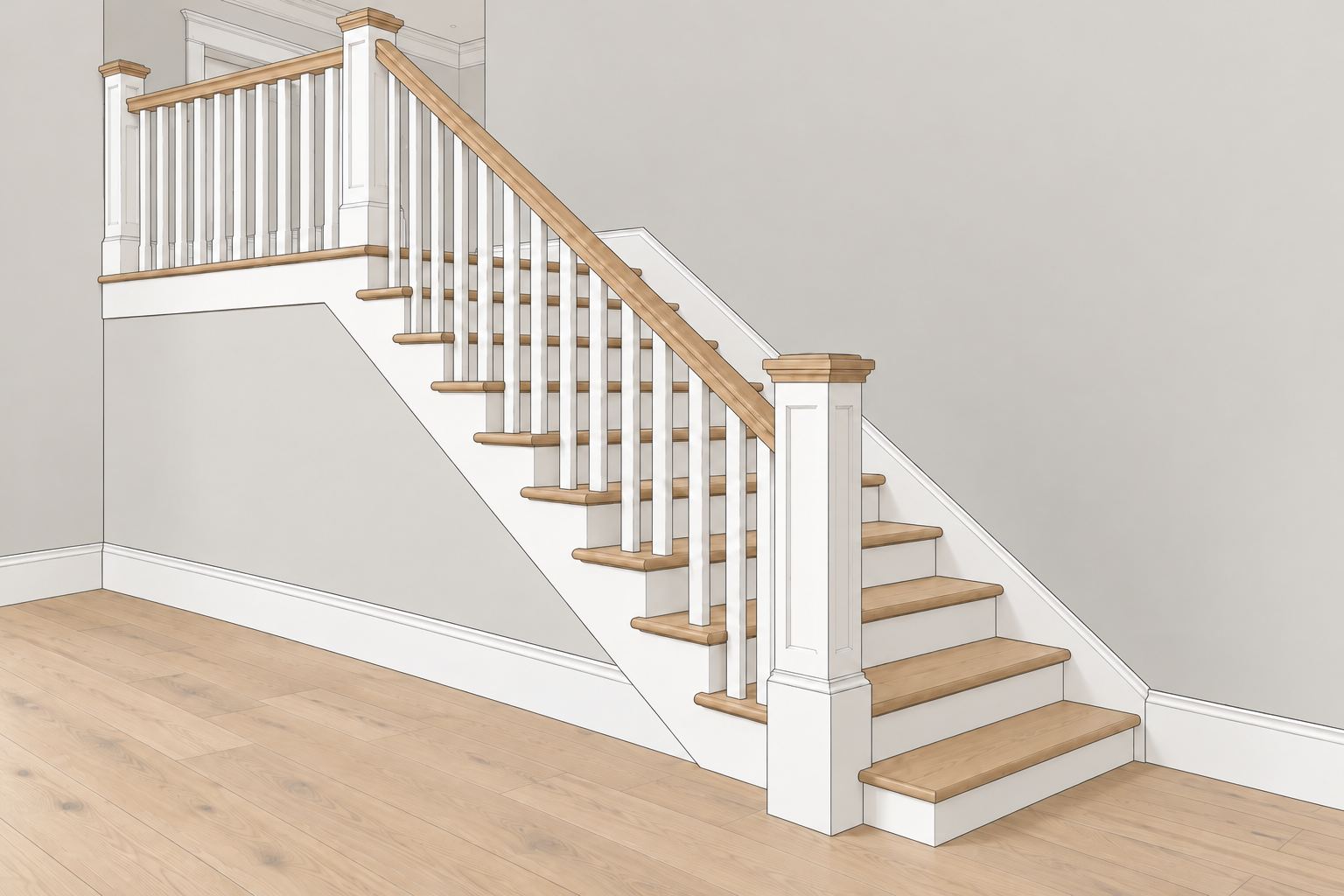
Newel post
The large post that anchors the railing at the bottom, landings and corners.
Balusters
The vertical pieces between the stairs and the rail, also called spindles.
Balustrade
The whole assembly: newels, balusters and rail.
Treads, risers and skirt board
Treads are what you step on, risers are the faces between them, and the skirt board runs along the wall.
A handrail is what you hold. A railing is the barrier along an open side. On an open stair the top of the railing is usually the handrail too.
Trim styles, from simple to built-up
We install millwork with real depth and proportion, not the thin, rounded "clamshell" casing sold at big-box stores.
Flat stock
Square-edged casing and baseboard, often with a thicker head. Suits craftsman, farmhouse and modern homes.
Flat stock with back band
Flat casing wrapped in back band, with a capped baseboard, for more depth.
Profiled trim
Molded casing and baseboard in the larger sizes traditional rooms need.
Built-up trim
Several moldings layered together, with plinth blocks and built-up crown. The most labor and the most presence.
Custom profiles
A millwork shop can match an older house or a detail you love, with longer lead times.
Scale to the room
Taller ceilings call for taller base and larger crown, or the trim looks undersized.
Paint-grade trim
Trim is usually painted in a satin or semi-gloss sheen so it wipes clean. The higher the sheen, the more it shows dents and imperfections.
Stain-grade trim
Stain-grade trim shows the wood itself.
We steer people toward a clear finish over the natural wood rather than a stain. It's easier to live with: a scratch or ding doesn't expose a lighter color underneath, and touch-ups blend in. It also makes future repairs and additions much simpler, because new pieces of the same species can be matched by eye, while matching a stain color years later is hit or miss. And it's less work up front. Clear finishes come in matte, satin and gloss; matte and satin look the most natural.
More guides
Outside the house
Have a question that isn't here?
Send it our way. If we hear it often, it'll likely end up in one of these guides.