 BIRCH COVE BUILDERS
Tile types
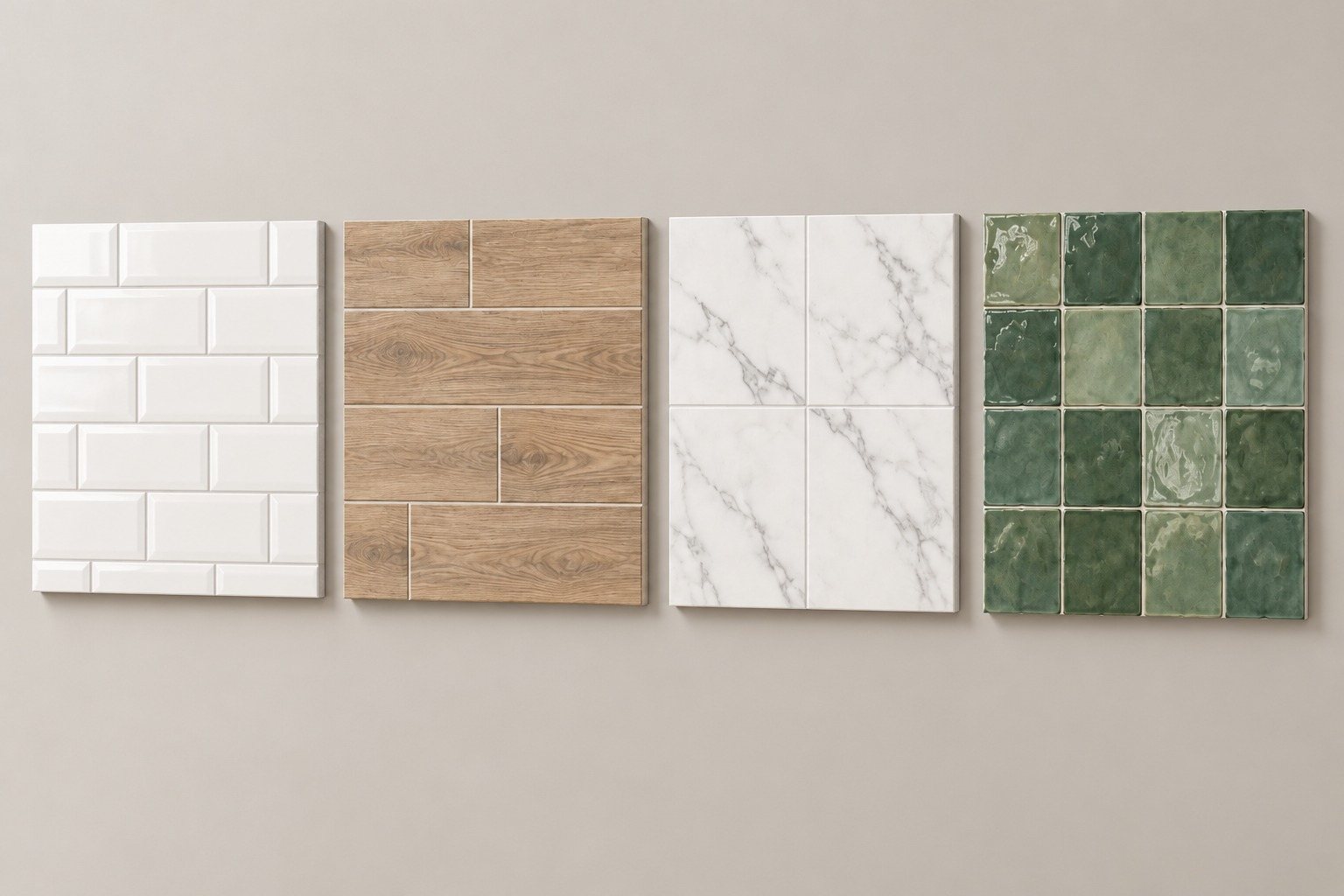
Ceramic
Economical and lightweight. Best on walls and backsplashes.
Porcelain
Dense and tough, for floors and showers. It can look like wood, stone or concrete.
Natural stone
Marble, slate and travertine. Each piece is unique, and it needs sealing.
Glass tile
Bright and reflective, often as mosaics or subway shapes on backsplashes and shower walls. It's set in white thinset and cuts with more care, so labor costs more. Not for most floors.
Handmade tile
Glazed and uneven by design, like zellige. The most character and the most expensive.
Patterns, size and grout
The same tile can look completely different depending on how it's laid. Straight patterns are the most economical, and angled ones like herringbone, chevron and diagonal take more cuts and labor.
- Half offset (running bond)Each row shifts half a tile, like brick. Classic for subway tile.
- Third offsetEach row shifts a third. The usual choice for long tile, which can bow slightly in the middle.
- StackedTiles line up in a straight grid. Clean and modern, and it shows every joint.
- Vertical stackLong tiles stood on end in a grid. Makes a wall look taller.
- HerringboneRectangles set in a zigzag. Lots of movement, and more labor to cut.
- ChevronLike herringbone, but the ends are cut at an angle so they meet in a clean point.
- DiagonalSquare tile set at 45 degrees. Can make a small room feel wider.
- BasketweavePairs of tiles alternate direction, like a woven basket.
- Mosaic sheetsSmall tiles come spaced on a mesh-backed sheet about a foot square (one outlined), so they go up a sheet at a time. Common for glass, shower floors and backsplashes.
Size
Large tiles mean fewer grout lines but need a flatter floor. Small mosaics give grip on shower floors.
Grout
Cement grout is standard and should be sealed. Epoxy and urethane grouts cost more and resist stains.
We order 10-15% extra for cuts, and it's worth keeping a box from the same batch for future repairs.
More guides
Outside the house
Have a question that isn't here?
Send it our way. If we hear it often, it'll likely end up in one of these guides.