 BIRCH COVE BUILDERS
Siding and exterior insulation.
Siding sets the look of the house and decides how much upkeep it will need for decades.
Common siding considerations
Each siding from the front and in section. Thickness is exaggerated so the shapes read.
- VinylA thin, hollow-backed panel that hooks into the course below. Light and affordable.
- Engineered woodWood strands and resin pressed into long, solid boards. Tough against dents.
- Fiber cementThin, dense cement boards. Very stable and doesn't burn, but heavy.
- CompositeColor built in through the board. The least upkeep of the painted-look options.
- Real woodCedar bevel siding, thick at the bottom and thin at the top. The real thing.
- Board and battenWide vertical boards with narrow battens over the joints. Made in real wood, engineered wood or fiber cement.
- MetalSteel panels with raised ribs, usually run vertically. Long lasting and fire resistant.
The look of the house
Shingles, lap siding, board and batten and metal panels each suit different houses, and many homes mix two, like lap below and shingles in the gables.
Weather and exposure
South and west walls fade and wear first, and lake-facing walls take wind-driven rain. All siding needs clearance above the ground, decks and roofs.
Trim and details
Corner boards, window trim, soffits and fascia are planned with the siding.
Repairs down the road
With prefinished products, keep a few spare pieces, since colors and profiles change over the years.
At a glance
| Material | Upkeep | Color choice | Main thing to know |
|---|---|---|---|
| Vinyl | Very little. | The maker's palette. | The most affordable, with far better looks than it used to have. |
| Engineered wood | Repaint every so often; keep edges sealed. | Factory colors, or any paint. | Lighter and tough against impacts, with long boards. |
| Fiber cement | Repaint every so often. | Factory colors, or any paint. | Heavy, very stable and doesn't burn. |
| Composite | Least. Wash it occasionally. | The maker's palette. | Color is built in. Painting is possible but defeats the purpose. |
| Real wood | Most. Refinishing on a cycle, or let it weather. | Unlimited, any paint or stain. | Unmatched look and texture; the finish you pick decides the upkeep. |
| Metal | Very little. | Wide range of factory finishes. | Long-lasting and fire resistant; can dent. |
Vinyl has come a long way
Today's vinyl looks far better than it used to, and it still never needs paint.
More profiles
Narrow and wide laps, board and batten and shingles for gables, with thicker panels and realistic textures that read much closer to painted wood.
Deeper colors
Newer formulas hold darker colors that used to fade or warp.
Good to know
Vinyl moves a lot with temperature, so it hangs loosely. A hard knock in deep cold can crack it.
Engineered wood and fiber cement
Both are painted sidings that look like wood and hold paint far better than wood does. Each comes primed or factory finished.
Engineered wood
Wood strands bonded with resin and treated against rot and insects. Lighter than fiber cement, with long boards and good impact resistance. The best-known name is LP SmartSide.
The paint and sealed cut edges are what protect it.
Fiber cement
Cement, sand and wood fiber. Heavy, very stable, and it won't rot or burn. The best-known name is James Hardie.
It still gets repainted eventually, just less often than wood.
Composite siding
Composite siding looks like painted wood, won't rot, and the color is built in at the factory, so there's no painting. It generally costs more than fiber cement and engineered wood.
The two main kinds are cellular PVC, like XCEED siding from VERSATEX, and mineral composite, like Everlast siding. Both come in a set palette of factory colors.
The trade-offs
Fewer color choices
You choose from the maker's palette, usually a few dozen colors or fewer.
Painting is possible, but not ideal
Painting it brings back the upkeep you paid to avoid.
Real wood siding
Nothing else looks or ages like real wood. It takes more care, and the finish decides how much.
Vertical board and batten
Wide vertical boards with battens over the joints. A farmhouse look that also suits modern homes, often rough-sawn hemlock, pine or cedar.
Cedar lap siding
Overlapping horizontal boards, also called bevel or clapboard. Smooth or rough-sawn, clear or knotty. Rot resistant and takes stain well.
Cedar shakes and shingles
Individual cedar pieces in overlapping courses. Classic on cottages, and they weather to a soft silver-gray if left natural.
Choosing a species
Pine
The most economical, knotty and rustic. Needs its finish kept up.
Hemlock
Straight grain and holds paint well, but isn't rot resistant on its own.
Cedar
The most rot resistant and stable, and the only one we'd leave unfinished.
Finish all sides before it goes up, seal cut ends, use stainless or galvanized nails, and leave an air gap behind it.
Paint, stain or let it weather
The more a finish covers the wood, the longer it lasts and the less grain you see. Recoat times are rough; sunny walls wear fastest.
| Finish | Look | Upkeep | Good to know |
|---|---|---|---|
| Unstained, left to weather | Turns silver-gray over a few seasons. | No refinishing. | Best with cedar. Weathers unevenly at first: areas under eaves and porches stay darker longer. Some people apply a bleaching stain to speed up an even gray. |
| Clear finish or toner | Keeps the wood's natural color, as close to new cedar as you can get. | The most frequent, about 1-3 years. | Sunlight grays wood quickly once the finish wears, so keeping the fresh-cut look takes regular attention. |
| Semi-transparent stain | Tints the wood while the grain and knots show through. | About 3-5 years. | Soaks in rather than forming a film, so it doesn't peel. Works best on rough-sawn or weathered surfaces and on cedar. |
| Solid (opaque) stain | Looks painted from the street but keeps more of the wood texture. | About 5-7 years. | Thinner than paint, so it tends to wear away instead of peeling, and recoating is easier. Popular on rough-sawn board and batten. |
| Paint | Solid color, any shade. Hides the grain; texture still shows on rough wood. | The longest between coats, often 7-10 years with good prep. | Sits on the surface as a film, so when it fails it can peel and needs scraping before repainting. Best over a good primer on all sides. |
Rough or smooth face
Stain lasts noticeably longer on rough-sawn wood. Paint works on either.
Changing your mind later
Going from natural to solid stain or paint later is easy. Going back is very hard.
Metal siding
Today's steel siding suits modern and traditional homes alike, and pairs naturally with a metal roof.
Ribbed and corrugated
Exposed-fastener panels with a classic ribbed profile. The most economical metal.
Lap and board and batten
Steel shaped like lap or board and batten, some with a printed wood grain that reads as stained wood from the street.
Vertical panels
Concealed-fastener panels with clean vertical lines and no screws showing.
Weathering steel
Rusts to a stable brown layer that protects it. Runoff can stain concrete and stone below.
Pros and cons
In its favor
Very long lasting, won't rot or burn, and needs little more than a wash.
Things to weigh
It can dent, and dents mean replacing a panel. Trim details take care, and custom colors take time to order.
Insulation on the outside of the walls
A continuous layer of rigid foam or mineral wool board over the sheathing, under the siding. It's one of the best upgrades for a house up here, and it changes a lot of details, so it's decided early.
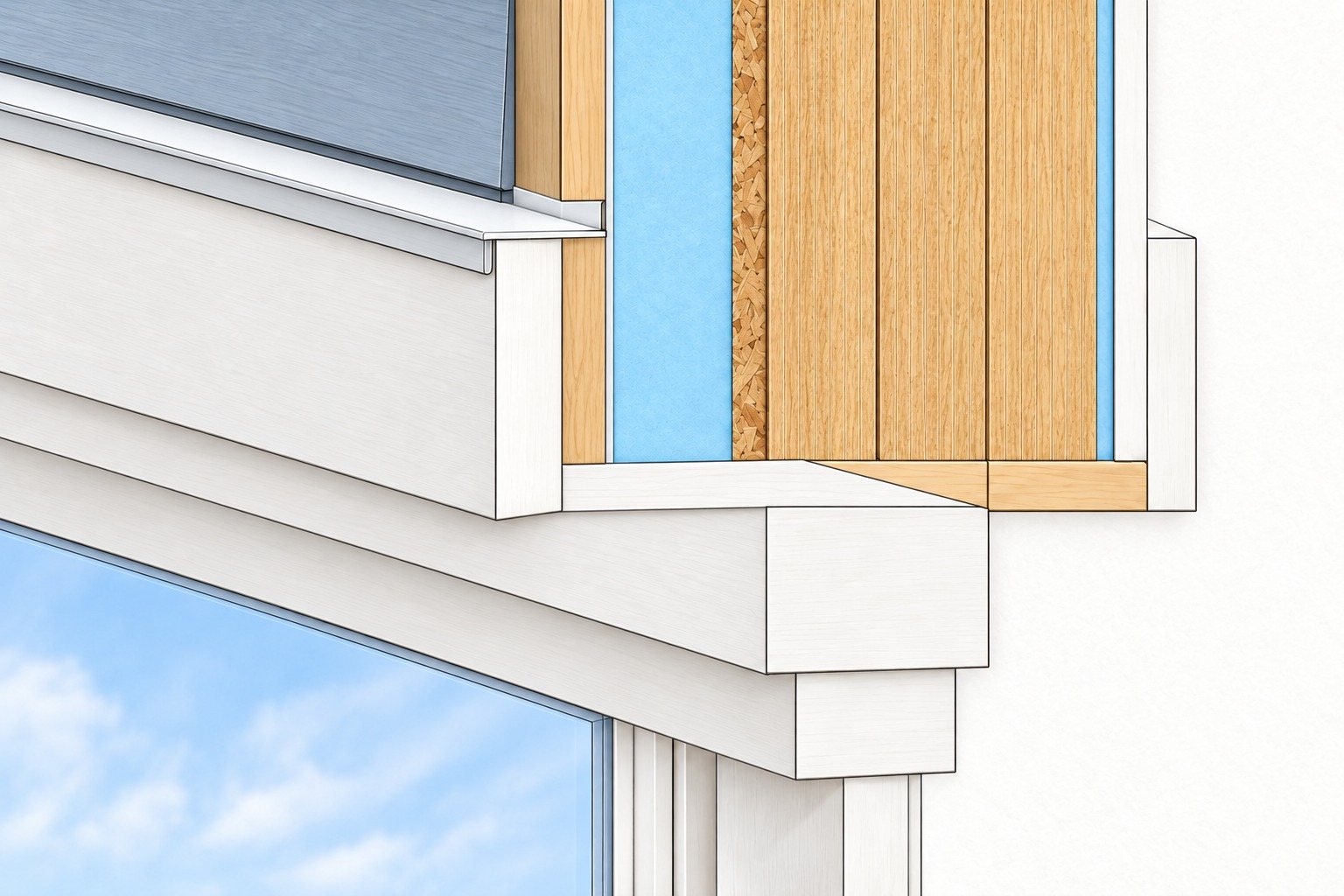
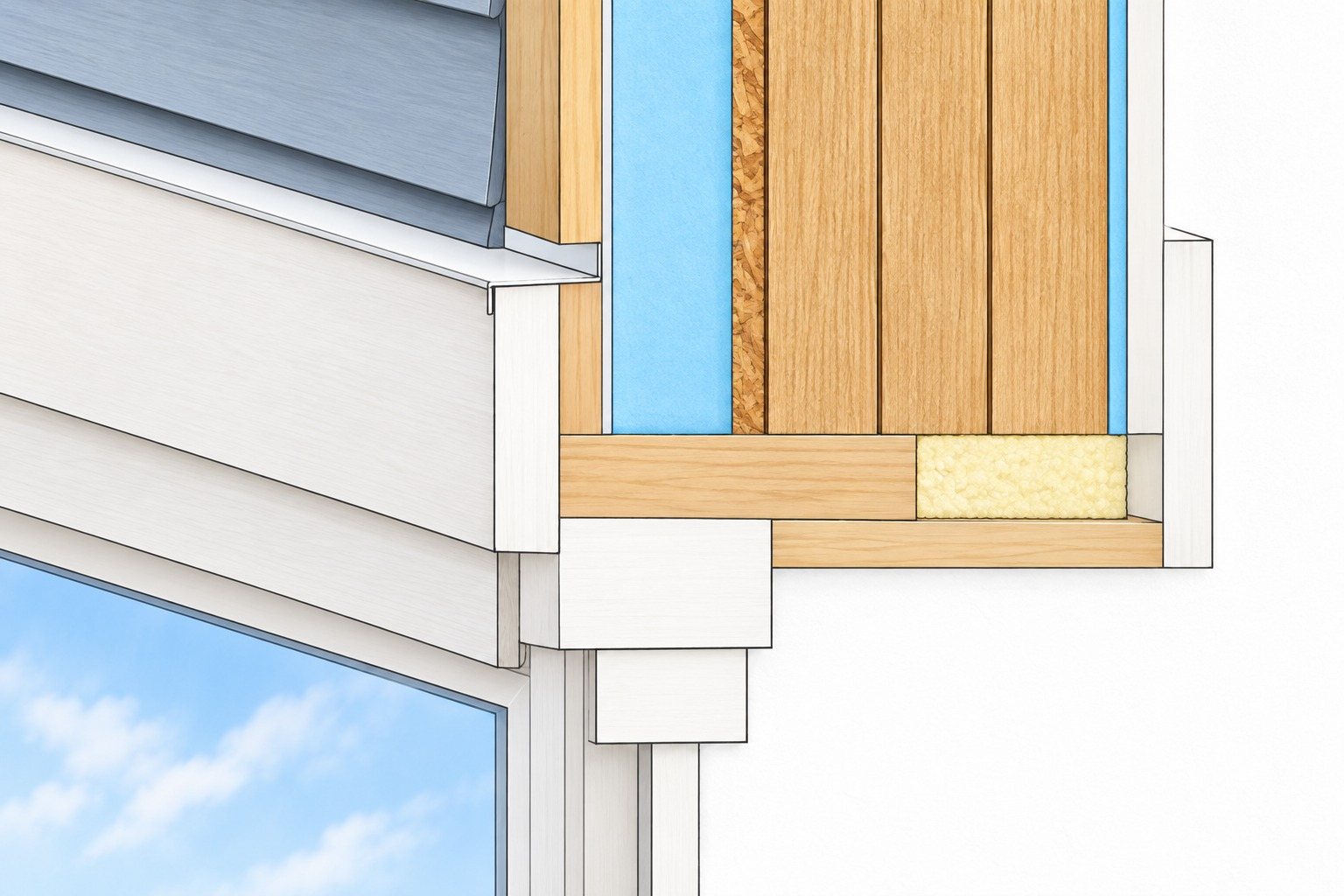
The benefits
Covers the studs
Every stud is a path for heat to escape. An outside layer blankets the framing.
A drier, warmer wall
Warm sheathing keeps moisture from condensing in the wall, and the air gap behind the siding lets it dry.
Comfort and quiet
Warmer walls, fewer drafts and a quieter house on windy days.
The concerns it creates
Thicker walls
Adds one to three inches or more to every outside wall, so windows, doors and trim all account for it.
Moisture has to be designed in
The foam thickness, wall insulation and vapor control are chosen together for our climate. Too thin a layer can do more harm than good.
Attaching things
Lights, hose bibs, vents and deck ledgers need long fasteners or solid mounting blocks set in the insulation.
The choices that follow
Window jamb depth
The window frame has to reach the inside of the drywall, so extension jambs are ordered with the windows.
Exterior doors
Doors are ordered with a jamb to match the thicker wall and a fully supported sill.
Insulation type
Insulated sheathing is simplest for thin layers. Foam board gives the most per inch. Mineral wool costs more but breathes and resists fire.
Siding attachment
Most siding goes on furring strips screwed through the insulation. Heavy sidings like fiber cement have limits from the maker.
Remodels and re-siding
Re-siding is the best time to add it. Existing windows will need new trim and extensions to match.
Siding questions we hear
Can we mix materials?
Yes, and it's common, like shingles in the gables over lap siding.
Will exterior insulation change how the windows look?
A little: deeper trim outside or a deeper sill inside, depending on where the windows sit.
Do dark colors fade?
All colors fade some on sunny walls, dark ones most. Factory finishes for dark colors hold up much better than they used to.
Can new siding go over old siding?
Sometimes, but we usually remove it so we can check the sheathing, fix flashing and add insulation.
Product and company names on this page are trademarks of their owners and are used only to identify those products as examples. Birch Cove Builders is not affiliated with or endorsed by these manufacturers.
More guides
Outside the house
Have a question that isn't here?
Send it our way. If we hear it often, it'll likely end up in one of these guides.