 BIRCH COVE BUILDERS
Asphalt shingles or standing seam metal.
Both do the job well up here. They differ in look, how they handle snow, how long they last and what they cost. Gutters are at the end.
How the two compare
| Architectural shingles | Standing seam metal | |
|---|---|---|
| Upfront cost | Lower. | Higher, and the installation is where most of the difference is. |
| Installation | Most roofers install them, and the work goes quickly. Chimneys, vents and valleys use standard flashing. | Done by specialized crews. Panels are cut to length for each roof, and every edge, valley and opening gets trim bent to fit, which takes more time and skill. |
| Lifespan | Typically two to three decades. | Often 50 years or more, with the finish holding its color for much of that. |
| Snow and ice | Holds snow. Ice dams can form at the eaves without good insulation and ventilation. | Sheds snow, often all at once. Snow guards are needed above doors, walkways, decks, lower roofs and gutters. |
| Look | Texture and shadow lines. Traditional and familiar. | Clean vertical lines that suit farmhouse, cottage and modern homes alike. |
| Repairs | Easy to replace a few shingles. | Damaged panels are replaced full length; small scratches can be touched up. |
| Weather | Rated for high winds when installed to the maker's specs. Impact-resistant versions are available. | Very wind resistant and doesn't burn. Large hail can dent it, though dents rarely cause leaks. |
Asphalt shingle options
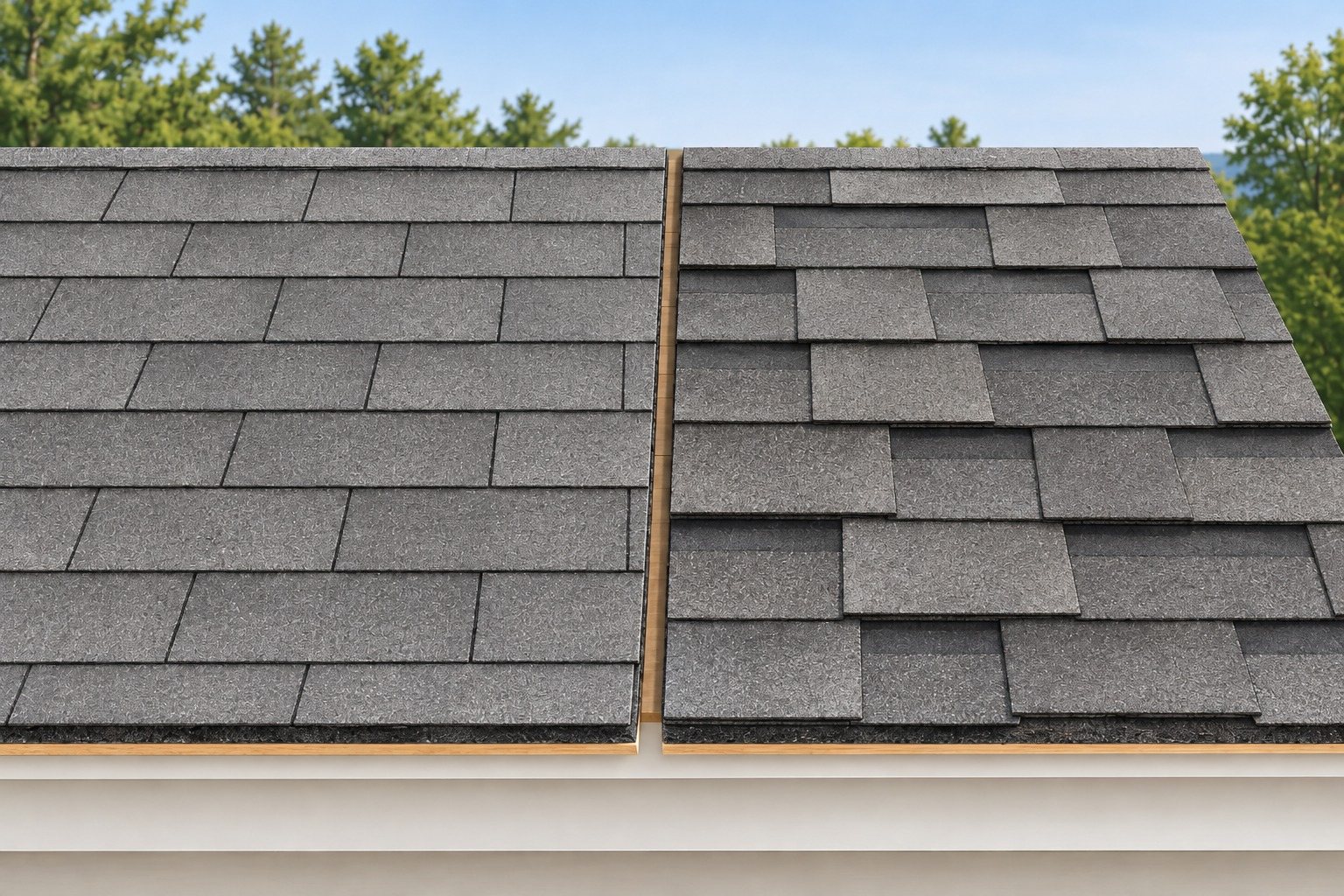
The steps up are heavier shingles with more depth, better wind and impact ratings, and longer warranties.
Three-tab shingles
Flat, single-layer shingles. Mostly used on garages and outbuildings now, with lower wind ratings and a shorter life.
Architectural shingles
Two bonded layers give depth and shadow lines and better wind resistance. The standard on most homes.
Impact-resistant shingles
Architectural shingles with the highest hail rating. Some insurers give a discount, so ask your agent.
On shaded roofs, algae-resistant shingles prevent the dark streaks that show up on north slopes under trees.
Standing seam options
Long metal panels run from eave to ridge, joined by raised seams and held by hidden clips, so no screws go through the metal where water runs.
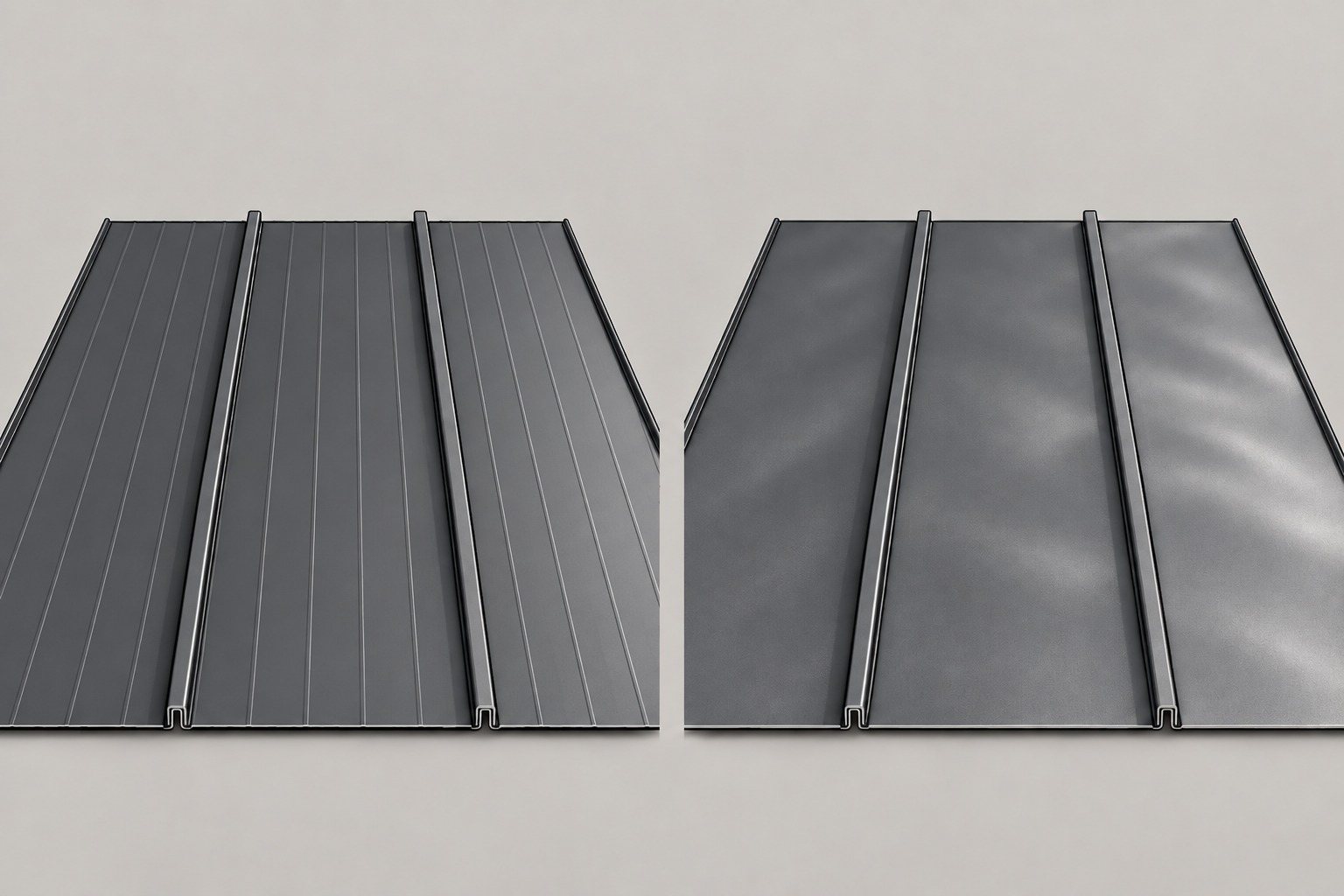
Striated or flat panels
Striated
Fine lines pressed along the panel break up reflections and hide waviness. Usually the standard.
Flat
The cleanest look, but it shows waviness the most, and keeping it flat takes heavier metal and narrower panels.
That waviness is called "oil canning." It's cosmetic and doesn't affect the roof, and most standing seam roofs we install are striated to minimize it.
The other choices
Panel width
Wider panels mean fewer seams and less labor. Narrower panels look more traditional and stay flatter.
Seam type
Snap-lock suits most homes. Mechanically seamed panels are the strongest for wind, low slopes and heavy snow.
Metal thickness
Heavier steel stays flatter and resists dents better.
Paint finish
Premium finishes hold color and sheen longer, which matters most on dark colors and sunny slopes.
Snow guards
Individual guards spaced across the roof, or continuous bars for a cleaner, stronger line.
Trim and details
Simple roofs are the least costly in metal. Every dormer, valley, skylight and chimney needs custom trim.
Choices that come with any roof
Underlayment
Synthetic underlayment over the whole roof, with an ice and water membrane at the eaves, valleys and openings. Full membrane coverage is an option.
Ventilation
Air moving from the eaves to a ridge vent keeps the deck cold and helps prevent ice dams.
Gutters
Sliding snow can tear gutters off a metal roof, so gutters and snow guards are planned together. More on gutters below.
Skylights and chimneys
Every opening gets flashing made for the roof type.
Gutter styles and materials
- Seamless aluminum K-styleFormed on site in one piece per run, in a wide range of colors. The most common gutter.
- Oversized aluminumThe same shape a size up, with bigger downspouts, for big or steep roofs.
- Half-roundA rounded, traditional profile on brackets. Suits older and cottage-style homes.
- CopperUsually half-round. Ages to brown and then green and lasts for decades.
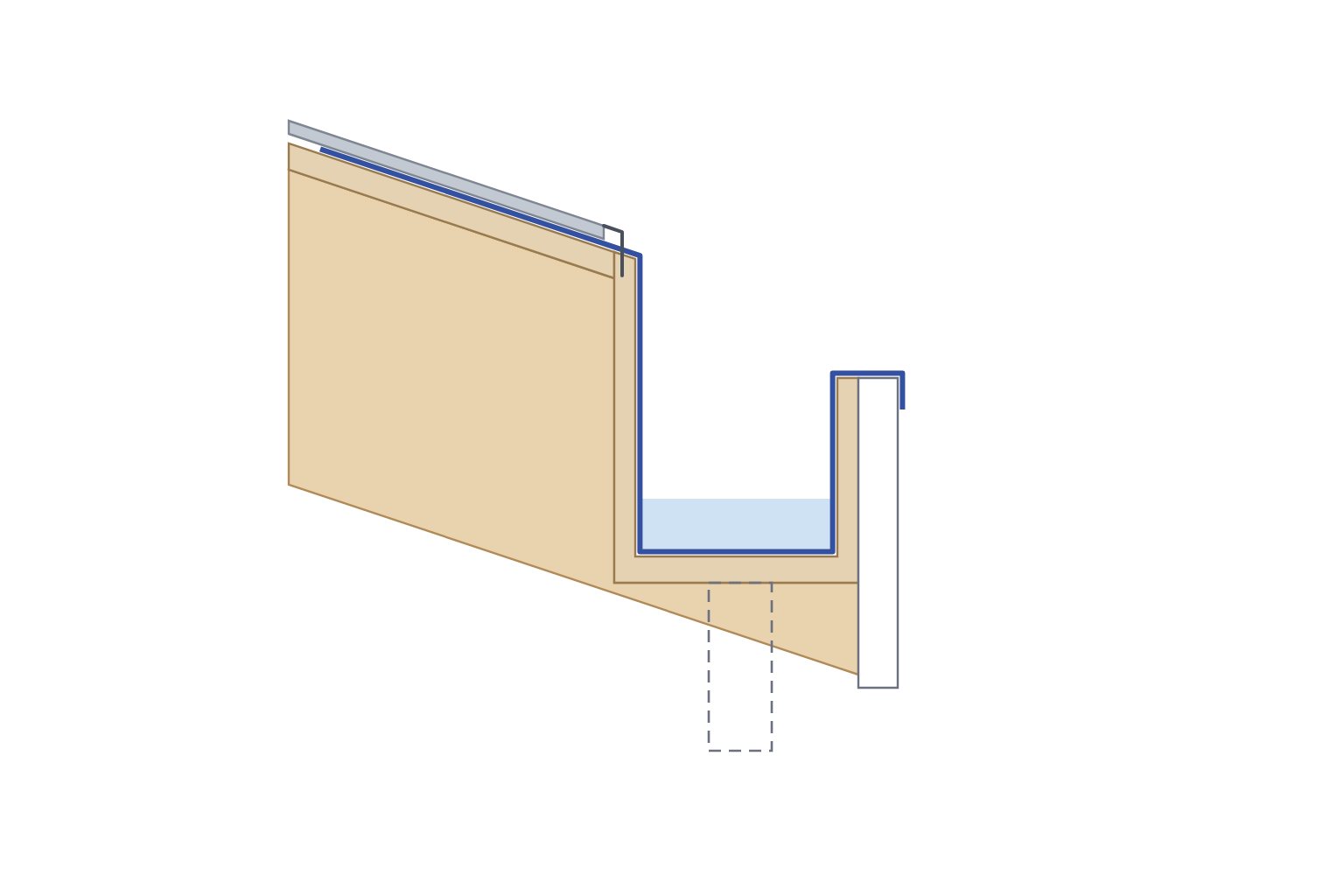
- Built-in (hidden) gutterA lined trough built into the roof edge, so nothing hangs off the fascia. The most expensive.
More guides
Outside the house
Have a question that isn't here?
Send it our way. If we hear it often, it'll likely end up in one of these guides.