 BIRCH COVE BUILDERS
Interior doors and hardware.
Interior doors are ordered with the trim, and a heavier door is one of the most noticeable upgrades in a house.
What the doors are made of
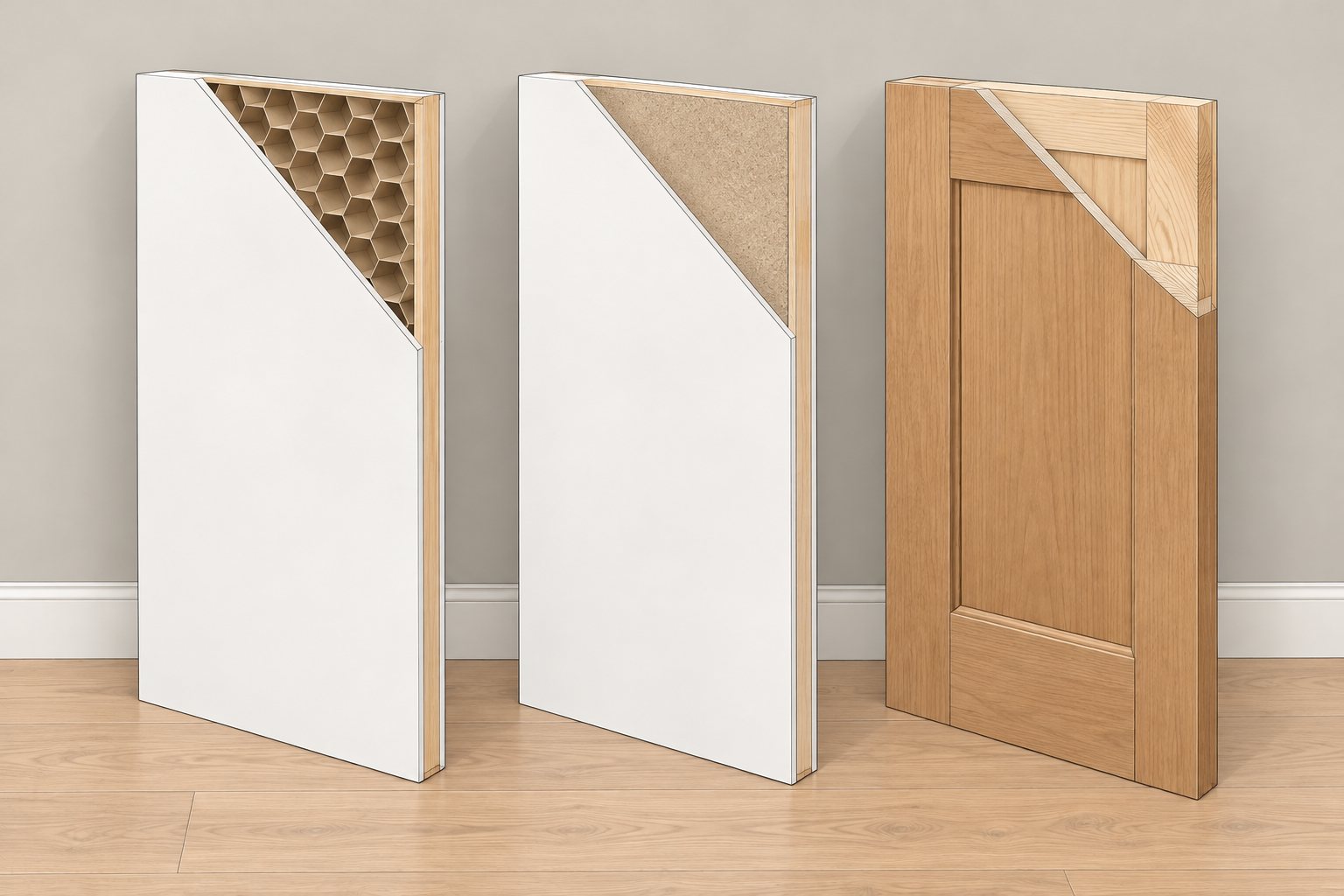
Hollow-core
Light and economical. Sound passes through, and they sound hollow when knocked.
Solid-core
A dense core inside. Heavier, quieter and more substantial, and still paintable. Our usual recommendation.
Solid wood
Stain-grade wood doors. The most expensive, and they move a little with humidity.
Door styles
Many people match the interior doors to the cabinet door style for a consistent look.
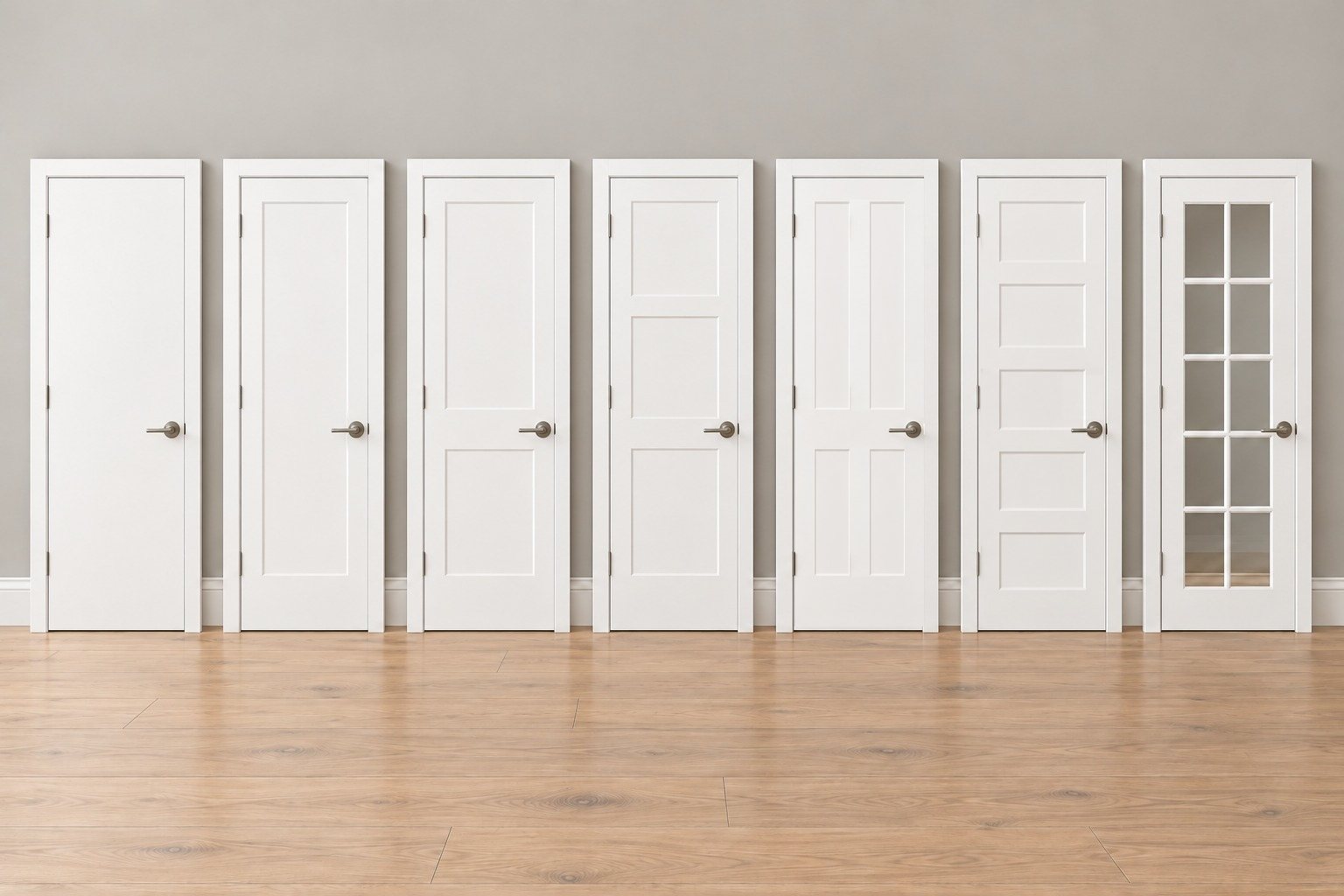
Flat
A smooth slab. Clean and modern.
One or two panel
Shaker style with one tall panel or two stacked. The most popular look today.
Three panel
Three equal panels stacked up the door. A clean craftsman look.
Four panel
Two panels over two, split down the middle. A classic, older-house look.
Five-panel
Five stacked horizontal panels. A craftsman and farmhouse look.
French or glass
French doors or a glass panel to share light between rooms.
Panel profiles
Any panel style can come with a different edge where the panel meets the frame. It's a small detail that sets the feel of the door.
- Flat panelA flat panel with square edges. The clean Shaker look.
- Chamfered panelA flat panel framed by a straight bevel. Crisp, with a little more shadow line.
- Raised panelThe panel thins to a tongue at the frame, then rises along a wide bevel to a raised center. The most traditional.
How the doors open
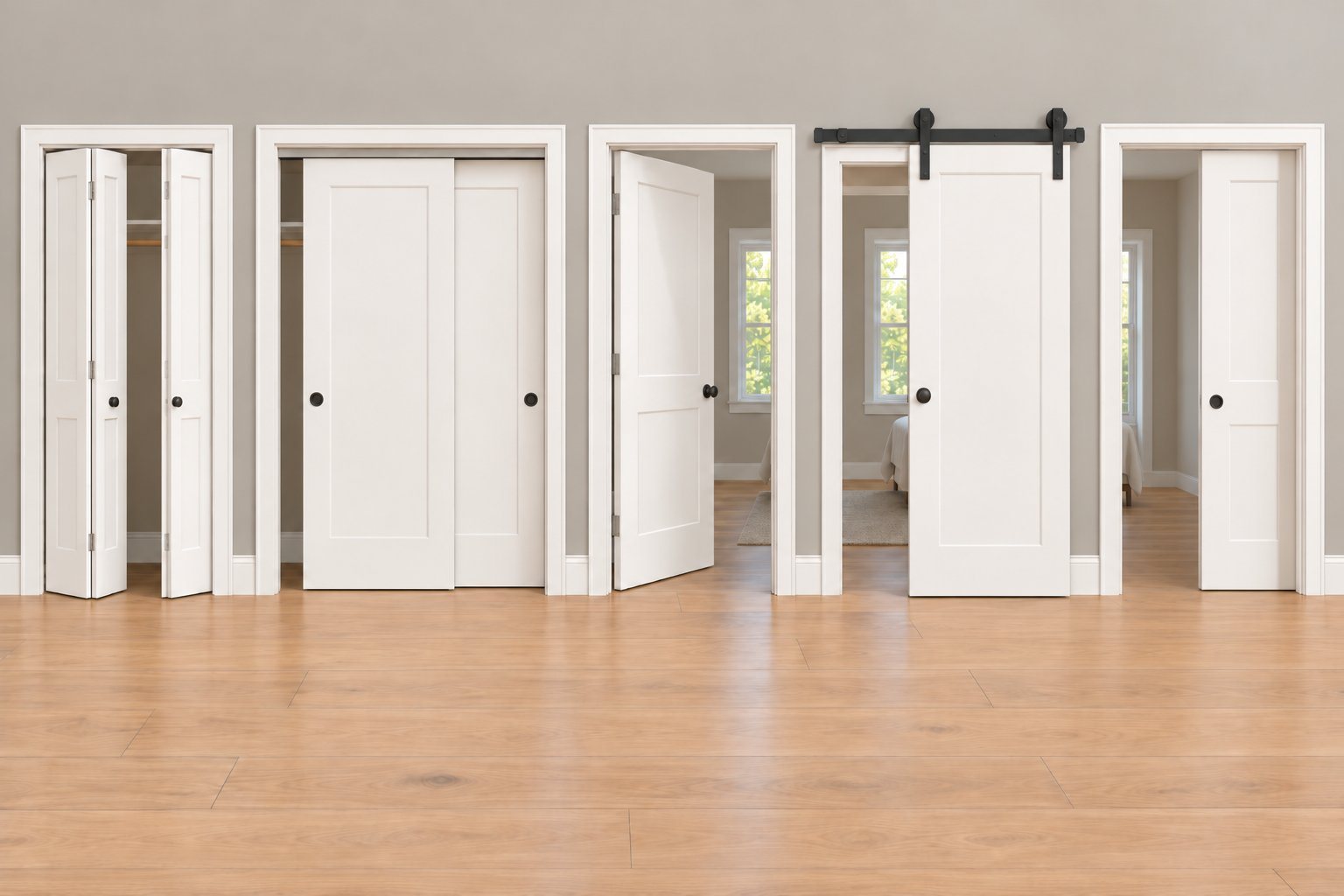
Bifold
Folds in half. Common on closets, and the most economical.
Bypass
Two doors on an overhead track that slide past each other. A simple choice for wide closets, though only one side opens at a time.
Swing
A standard hinged door. Seals best for privacy and sound.
Barn door
Slides on a track on the wall. A rustic or modern look, but it doesn't seal sound or light.
Pocket door
Slides into the wall and disappears. Saves floor space and has to be framed in early.
Door hardware
Levers or knobs
Levers are easier for kids, older hands and full arms. Knobs suit traditional homes.
Function
Passage sets for halls and closets, privacy sets that lock for baths and bedrooms, and keyed sets for exterior and utility doors.
Finishes
Matching the hinges and hardware throughout the house keeps it looking finished. The same finish ladder as faucets applies.
More guides
Outside the house
Inside the house
Have a question that isn't here?
Send it our way. If we hear it often, it'll likely end up in one of these guides.