 BIRCH COVE BUILDERS
Driveways and hardscaping.
Driveways, patios and walls only last as long as the base under them.
Driveway surfaces
Every driveway needs some upkeep. Concrete is the strongest and needs the least, but no surface is maintenance-free, and all of them depend on a good base and the right slope.
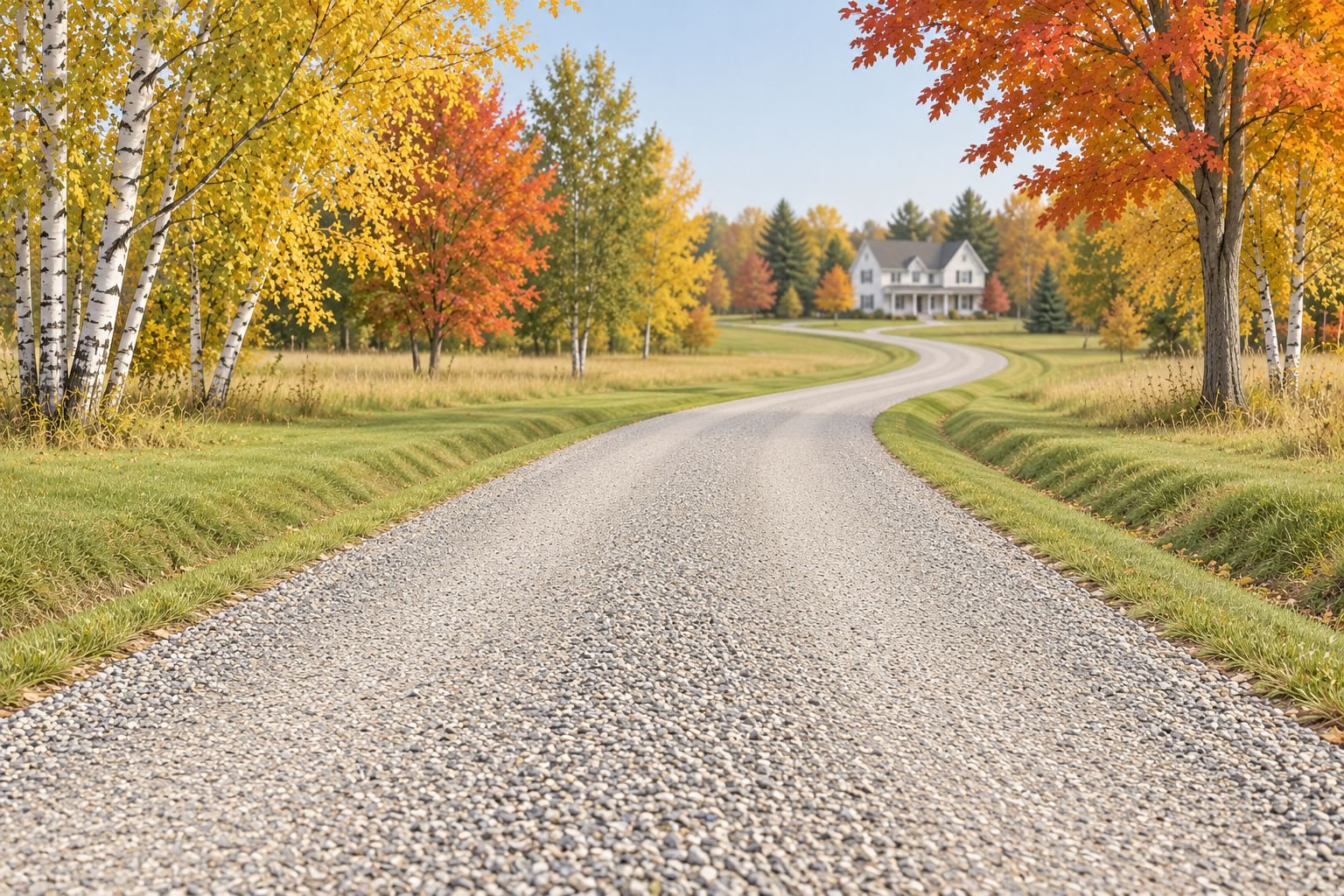
Gravel
The most economical, and the natural fit for a long rural drive.
Upkeep: Regrading and fresh stone every few years, and plowing pushes some stone into the yard.
Asphalt
Smooth, quiet and plow friendly, and it flexes with frost.
Upkeep: Crack filling and sealcoating every few years.
Concrete
The strongest and longest lasting, with a clean look.
Upkeep: Sealing every few years helps it stand up to salt, and joints control cracking but don't stop it entirely.
Pavers
Individual units on a compacted base. The most decorative.
Upkeep: Topping up joint sand, pulling weeds and resetting the odd paver that settles.
The base is several inches of gravel compacted in layers, so the surface has something solid to sit on through frost and heavy trucks. The slope runs away from the garage and the house, usually at least 1/8 inch per foot, so water never sits on the surface or soaks in at the edges. Get those two right and any of these surfaces lasts longer and needs less upkeep.
Patios and walkways
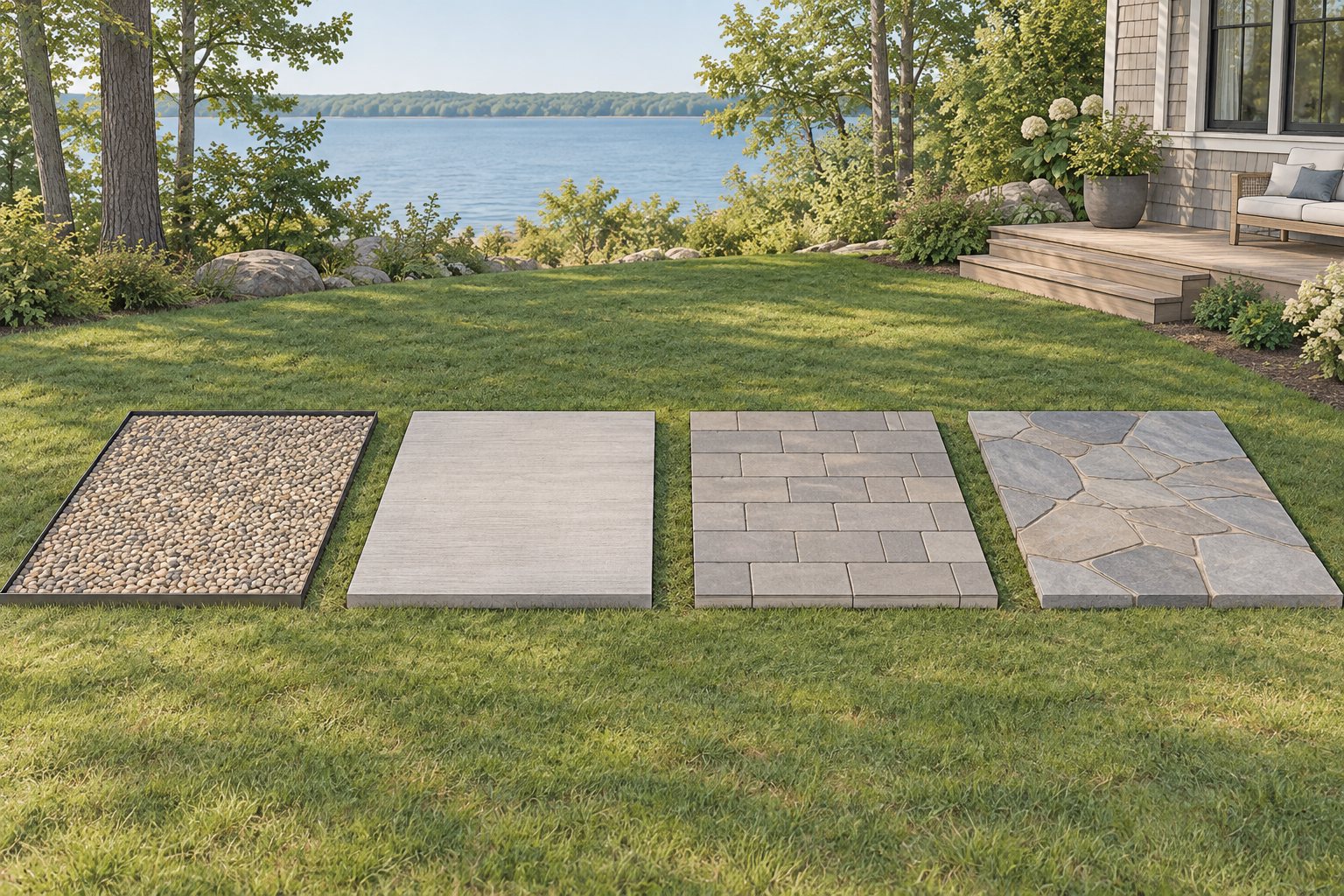
Pea stone or gravel
Economical, drains well and feels casual.
Concrete
Broom finished or stamped with a pattern. Durable and affordable.
Concrete pavers
Many shapes and colors, laid on sand and gravel.
Natural stone
Flagstone or bluestone. The most natural look and the most expensive.
Retaining walls
Costs overlap here. With good fieldstone on hand, a boulder wall can come in close to an interlocking block wall, and taller walls of any kind may need an engineer.
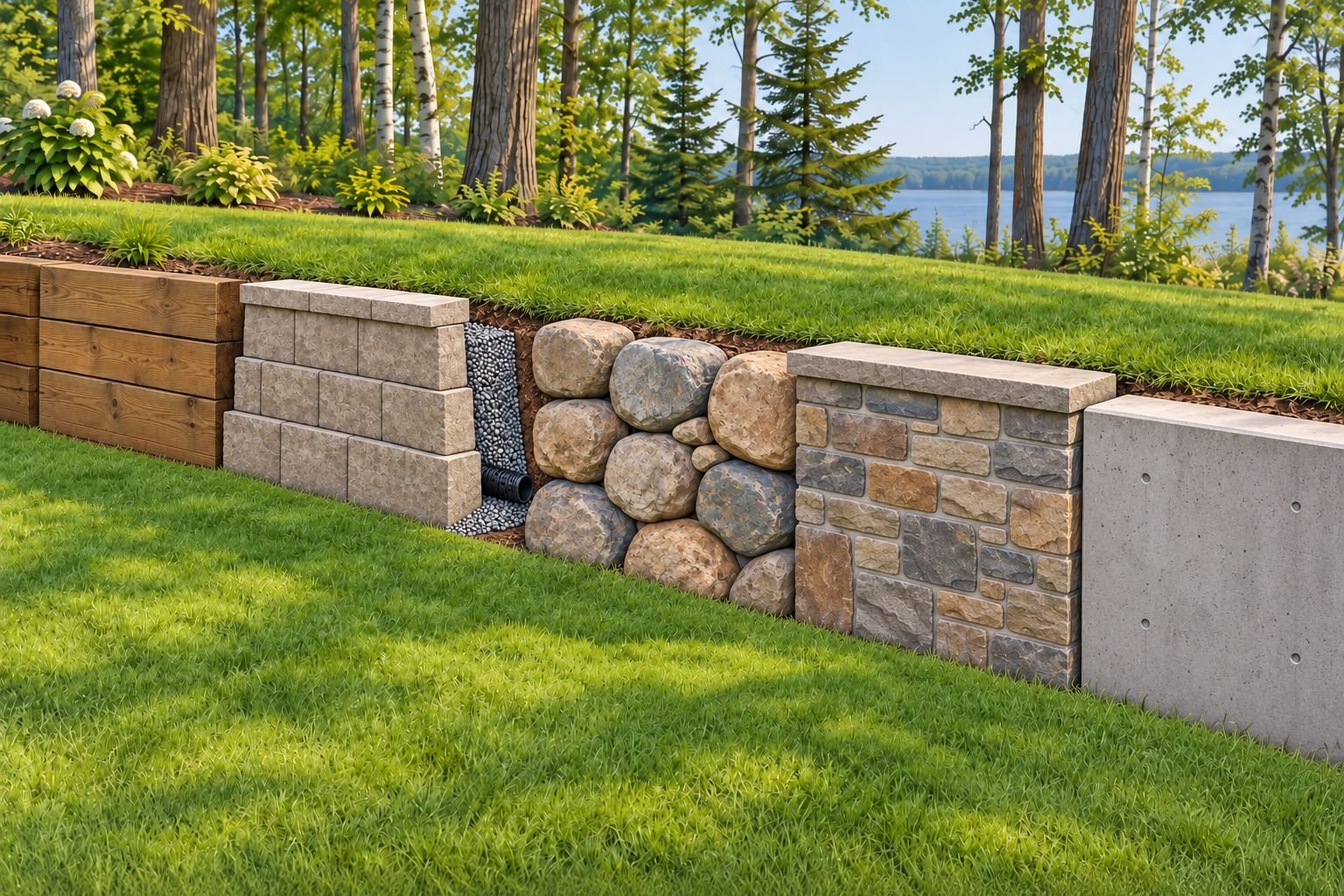
Timber
The most economical, with the shortest life.
Interlocking block
Concrete block made to stack without mortar, stepping back slightly each course. Clean, durable and the most common.
Boulders
Natural stone set by machine. The most natural look.
Concrete block
Mortared block on a footing, reinforced with steel and grout. Often faced with stone or stucco.
Poured concrete
Formed and poured on a footing with steel inside. The strongest choice for tall walls and walls that hold up a driveway or building.
Whatever the wall, it needs drainage stone and a drain pipe behind it. Water pressure, not soil, is what pushes most walls over.
More guides
Outside the house
Have a question that isn't here?
Send it our way. If we hear it often, it'll likely end up in one of these guides.