 BIRCH COVE BUILDERS
Windows and exterior doors.
Windows and doors are ordered early and take weeks to arrive, so they are some of the first selections we make together.
What the frames are made of
Most major makers, like Marvin and Andersen, offer lines at several of these levels.
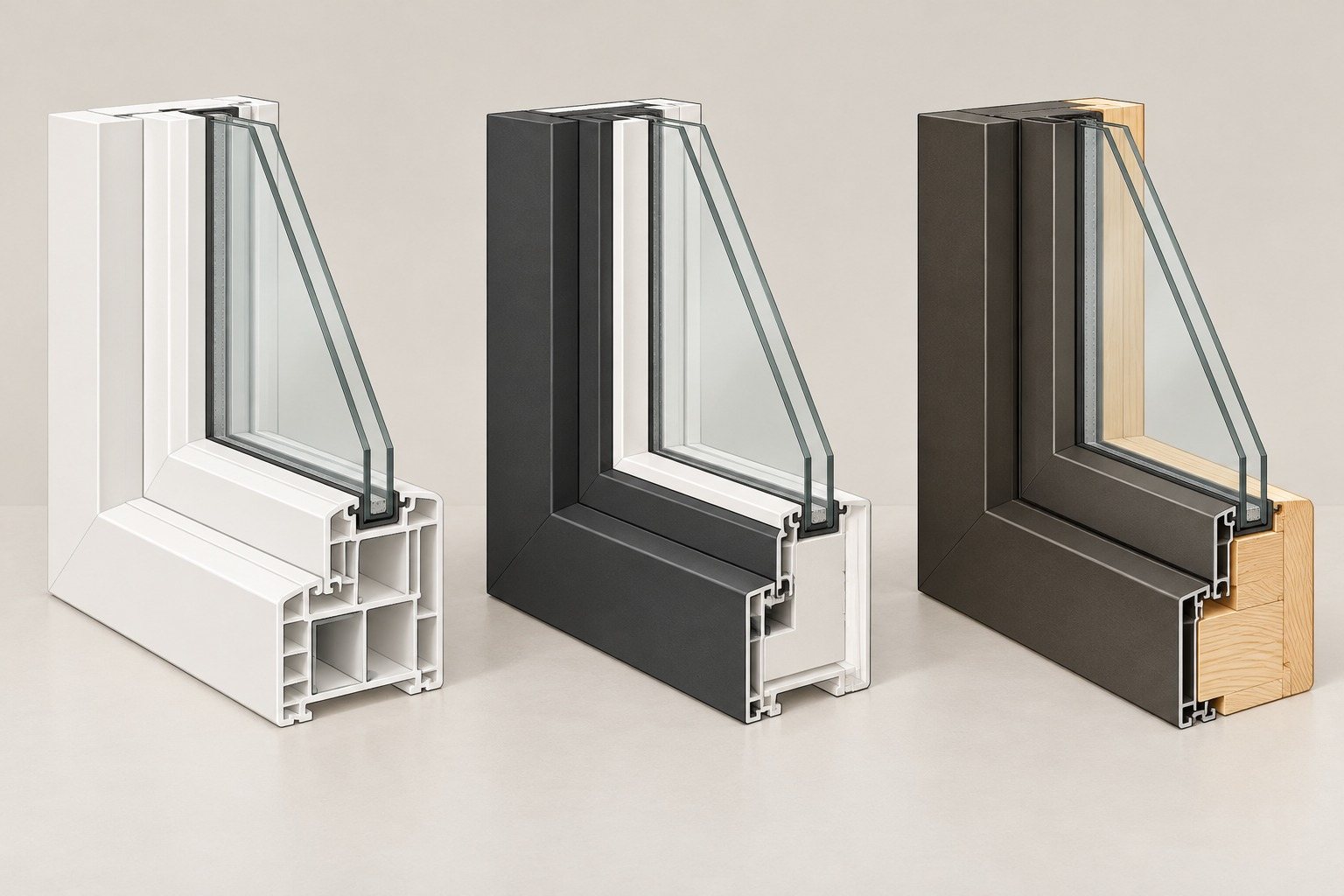
Vinyl
The most economical window. Low maintenance, but the frames are bulkier, the color choices are limited and it can't be painted.
Fiberglass
Strong and stable through hot summers and cold winters, with slimmer frames than vinyl. It can be painted, and many lines offer a wood interior.
Wood-clad
Real wood inside, with aluminum or fiberglass cladding outside that never needs paint. The warmest look and the most choices.
How the windows open
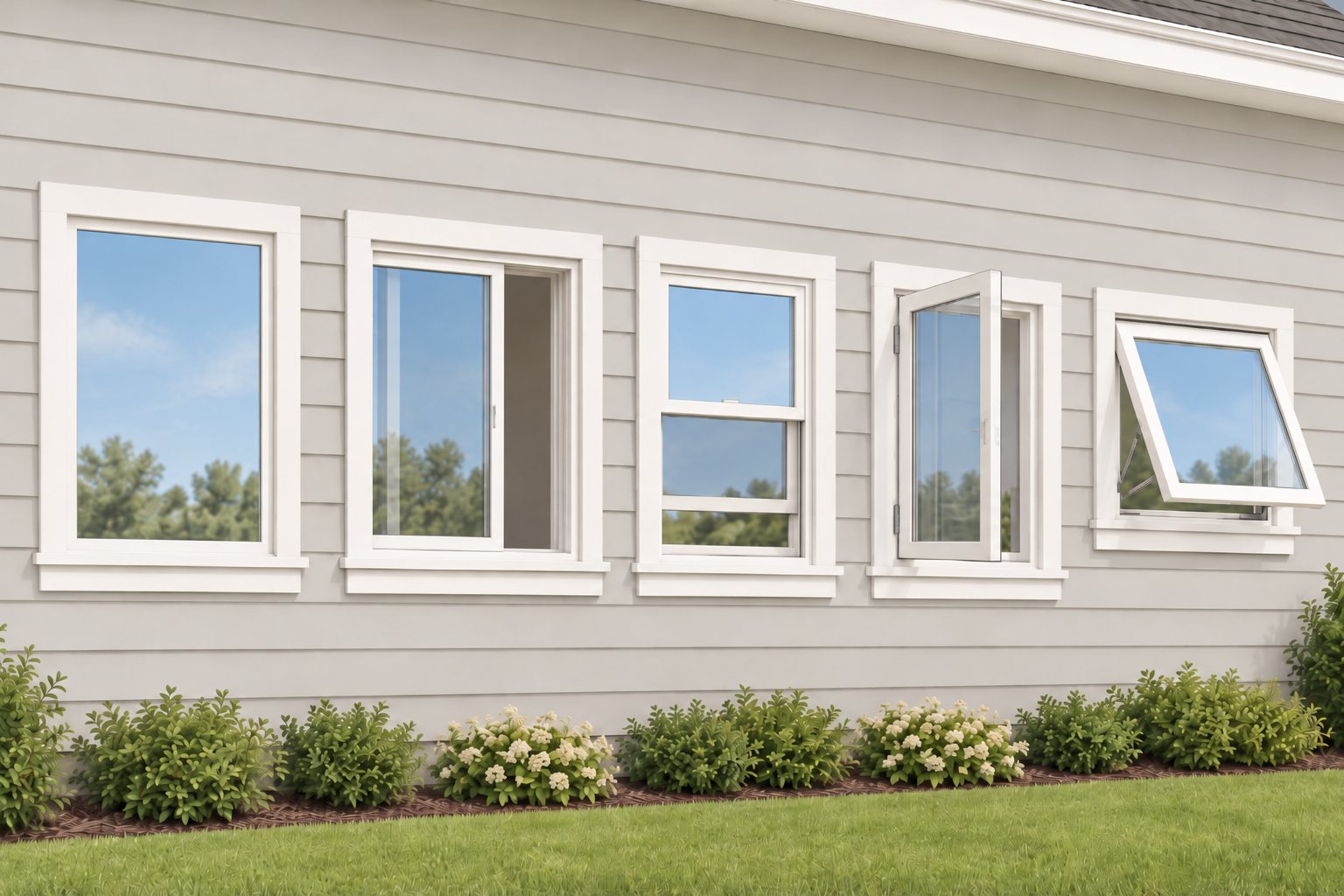
Picture
A fixed window that doesn't open. The most economical and the most glass for the money.
Slider
The sash slides sideways. Simple and affordable, common in basements and wide openings.
Single-hung
Looks just like a double-hung, but only the bottom sash moves. The top sash is fixed. A little less expensive.
Double-hung
Both sashes slide up and down. The traditional look, and the sashes tilt in for cleaning.
Casement
Hinged on the side and cranked open. Seals the tightest when closed and catches breezes well.
Awning
Hinged at the top, so it can stay open in a light rain. Often paired above or below a picture window.
Glass and grilles
Glass
Double-pane glass
Two panes with a low-E coating and gas fill. The standard on new windows and a big step up from older glass.
Triple-pane glass
A third pane for better efficiency and a quieter house. Heavier and more expensive.
Grilles
- No grillesClear glass, nothing between or on the panes.
- Grilles between the glassFlat bars sealed in the space between the panes. The glass stays flat on both sides.
- Simulated divided litesBars stuck to the inside and outside of the glass, with a dark spacer bar between the panes lined up behind them.
Tempered glass is required in some spots, like near doors, tubs and floors. We'll specify it where it's needed.
Entry and patio doors
Entry doors
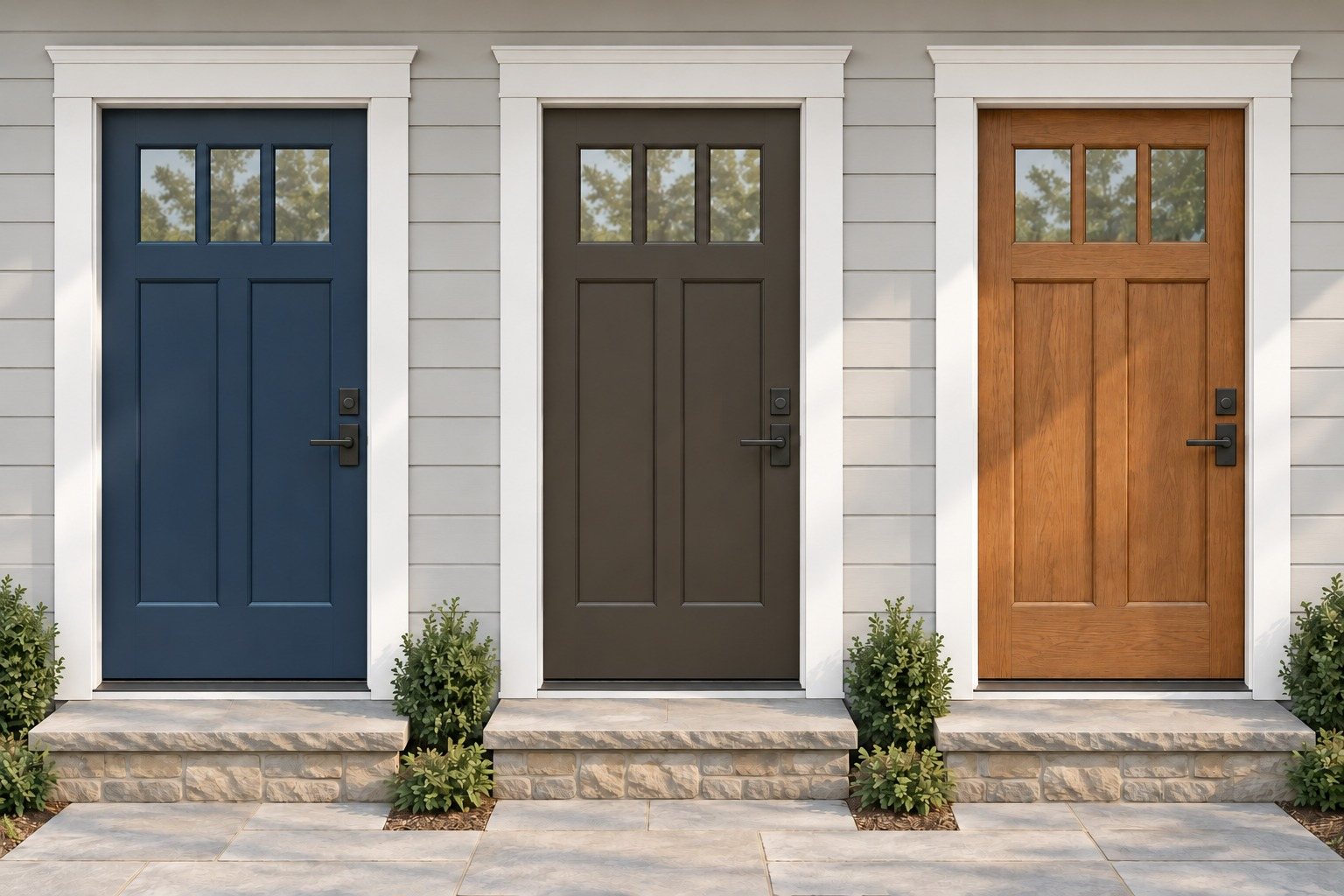
Steel or fiberglass
The most common entry doors. Steel is the most economical and very secure, but it can dent. Fiberglass won't dent, rot or warp, and it can be painted or stained to look like wood. Both insulate well.
Wood-clad
Real wood inside with aluminum cladding outside, so it matches wood-clad windows. You get the warmth of wood indoors and a finish outside that never needs paint.
Solid wood
Beautiful and substantial, stained or painted inside and out. It needs the most care, especially facing south or west, and does best under a porch roof.
Worth deciding with any entry door
Glass and sidelights
A solid door, a door with glass, or glass panels beside it (sidelights) and above it (a transom) to bring light into the entry. Each adds cost.
Locks and hardware
A handle set and deadbolt are standard. A multipoint lock latches at the top and bottom too, which holds a tall door tight against the weather. Keypad and smart locks are an easy add, but not every brand makes a keypad that works with a multipoint lock, so plan ahead.
Sill and swing
Most entry doors swing in. A low, accessible sill and a covered landing outside help keep water and snow out.
Patio doors
Patio doors come in the same materials as the windows (vinyl, fiberglass and wood-clad), so they usually match the windows you choose.
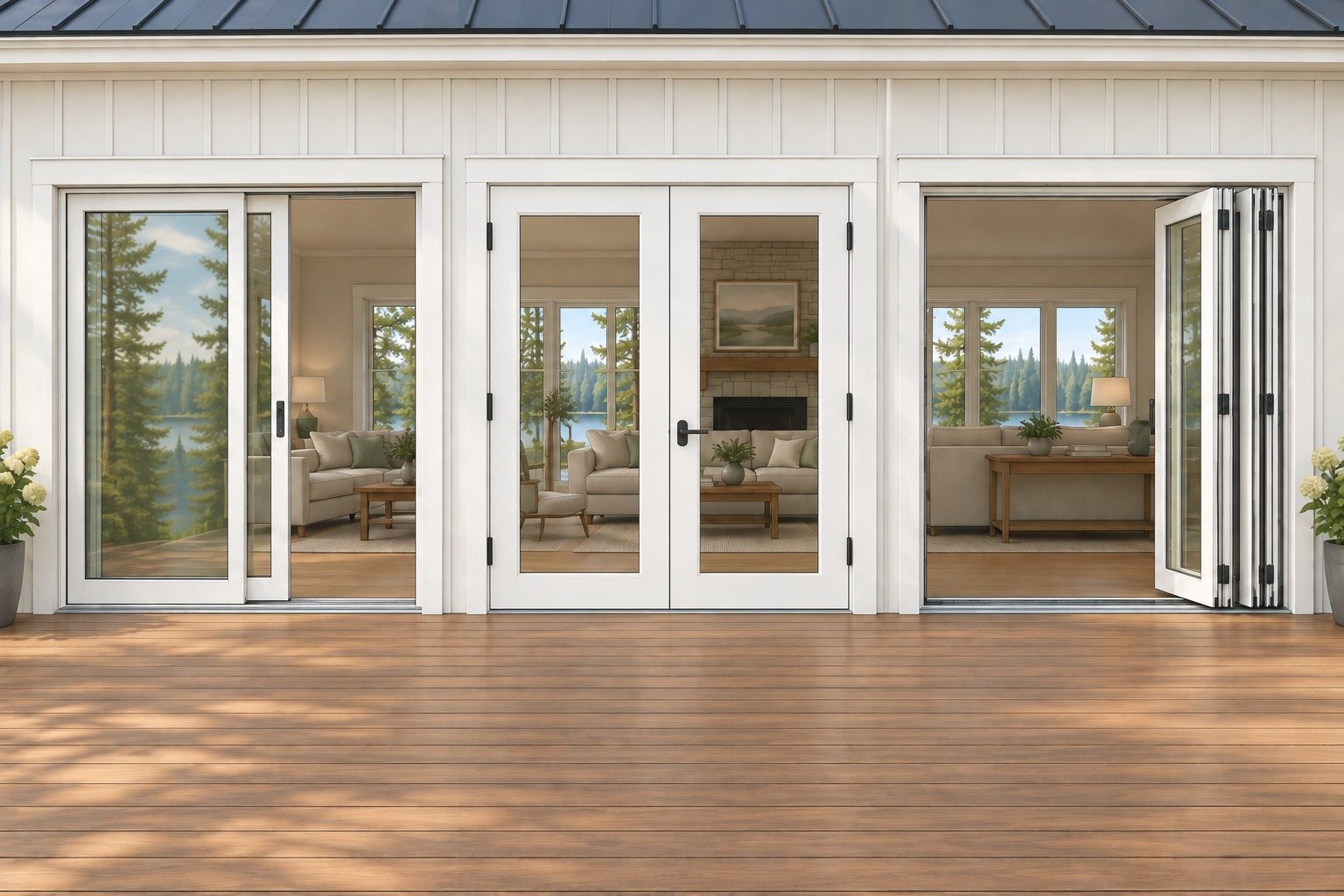
Sliding
The most economical, and space saving, since nothing swings into the room. One panel slides; the other is fixed.
Hinged French doors
A traditional look. One or both doors swing open on hinges, so they need clear floor space to swing.
Multi-slide or folding
Panels that stack or fold away to open a whole wall to the deck. The most dramatic and the most expensive.
If the walls get exterior insulation, the windows mount differently and need deeper jambs. See exterior insulation in the siding guide.
Product and company names on this page are trademarks of their owners and are used only to identify those products as examples. Birch Cove Builders is not affiliated with or endorsed by these manufacturers.
More guides
Outside the house
Have a question that isn't here?
Send it our way. If we hear it often, it'll likely end up in one of these guides.