 BIRCH COVE BUILDERS
Insulation, heating and cooling.
These choices are made before the walls close and decide how comfortable the house is for decades.
Insulation and soundproofing
Good insulation keeps the cold out and the warmth in, and it's easiest to get right while the walls are open.
Fiberglass batts
Pros: The most economical and the most common.
Cons: Only as good as the fit. Gaps around wires, pipes and boxes let heat slip by, and it doesn't stop air.
Blown-in cellulose or fiberglass
Pros: Fills around wires and odd spaces. The usual choice for attics, and it can be dense-packed into walls.
Cons: Loose fill can settle over time, and walls need netting to hold it in.
Mineral wool batts
Pros: Holds its shape, shrugs off water, resists fire and quiets sound.
Cons: Costs more than fiberglass.
Spray foam
Pros: Insulates and seals air leaks in one step. Closed-cell foam has the most insulation per inch.
Cons: The most expensive, and hard to change once it's in.
Soundproofing
Insulation also quiets a house. These go around bedrooms, bathrooms, laundry rooms and offices.
Sound batts in interior walls
Mineral wool in the walls and floors between rooms. The simplest step, and it makes a real difference.
Sealing the gaps
Sound travels through any opening, so outlets, pipes and door bottoms get sealed, and solid-core doors go where quiet matters.
Sound-damping drywall
A second layer of drywall with a damping compound between, or special sound-rated drywall. Good for media rooms.
Resilient channel or sound clips
Hangs the drywall on clips so it doesn't touch the framing directly. The most effective, and the most expensive.
Most heat loss comes from air leaks. Sealing the gaps around windows, outlets and framing pays off with any insulation. Exterior insulation, covered in the siding guide, adds another layer.
Heating and cooling systems
Here's the same house with each of the common systems. Many homes up here run on propane, since natural gas isn't available everywhere.
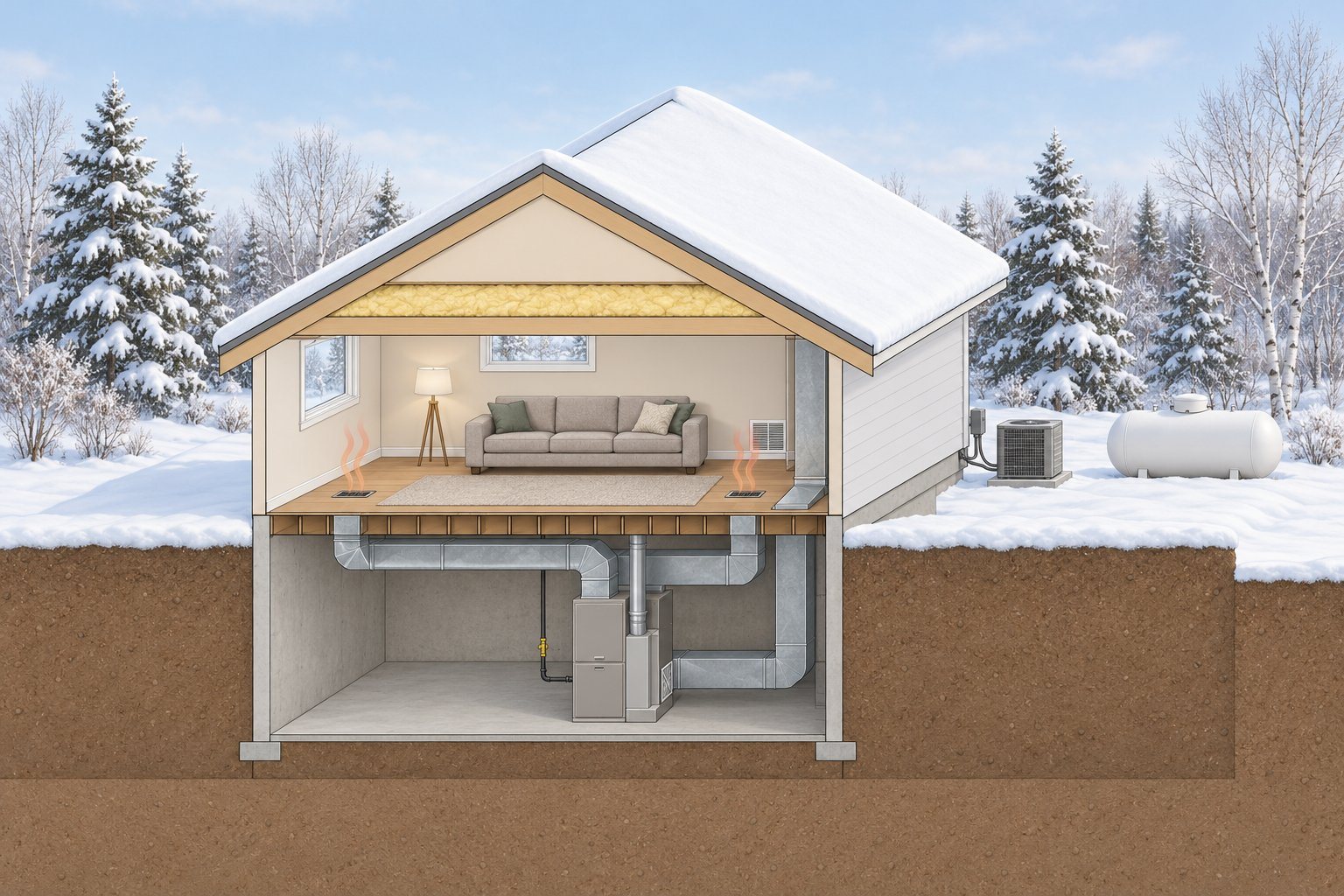
Furnace with central air
A furnace burns propane or natural gas and blows warm air through ducts to a register in each room. In summer, central air conditioning cools through the same ducts.
- Pros: Heats quickly, cools with central air, and it's the most familiar system to install and service.
- Cons: You feel the moving air and hear it run, and propane means a tank in the yard and deliveries.
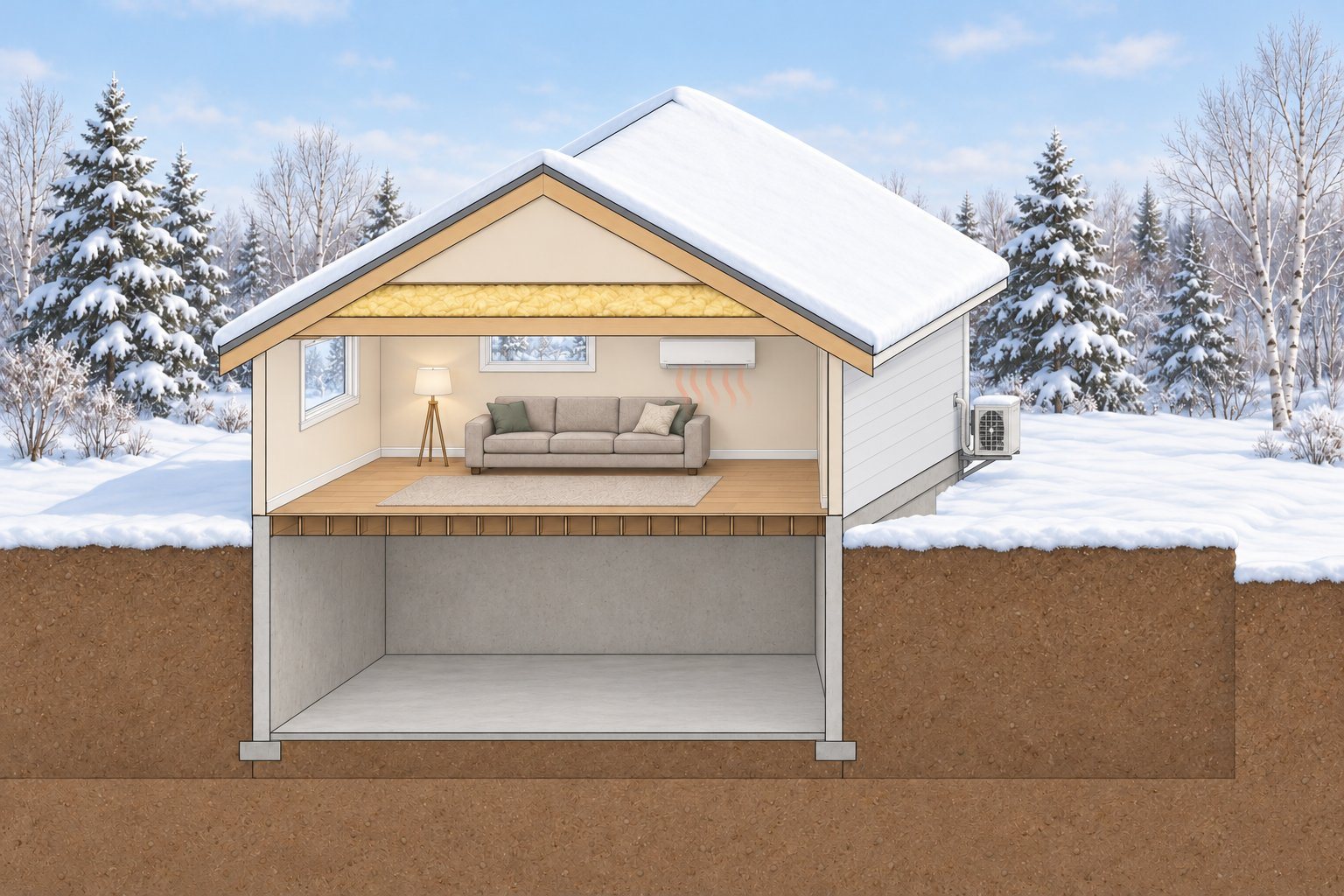
Ductless mini-splits
A unit high on the wall in each room connects through a small line to an outdoor unit. It's a heat pump, so it heats and cools on electricity with no ductwork at all.
- Pros: Very efficient, each room has its own control, and there are no ducts to run. Great for additions, garages and bonus rooms.
- Cons: There's a unit on the wall in every room you want heated, so covering a whole house takes several.
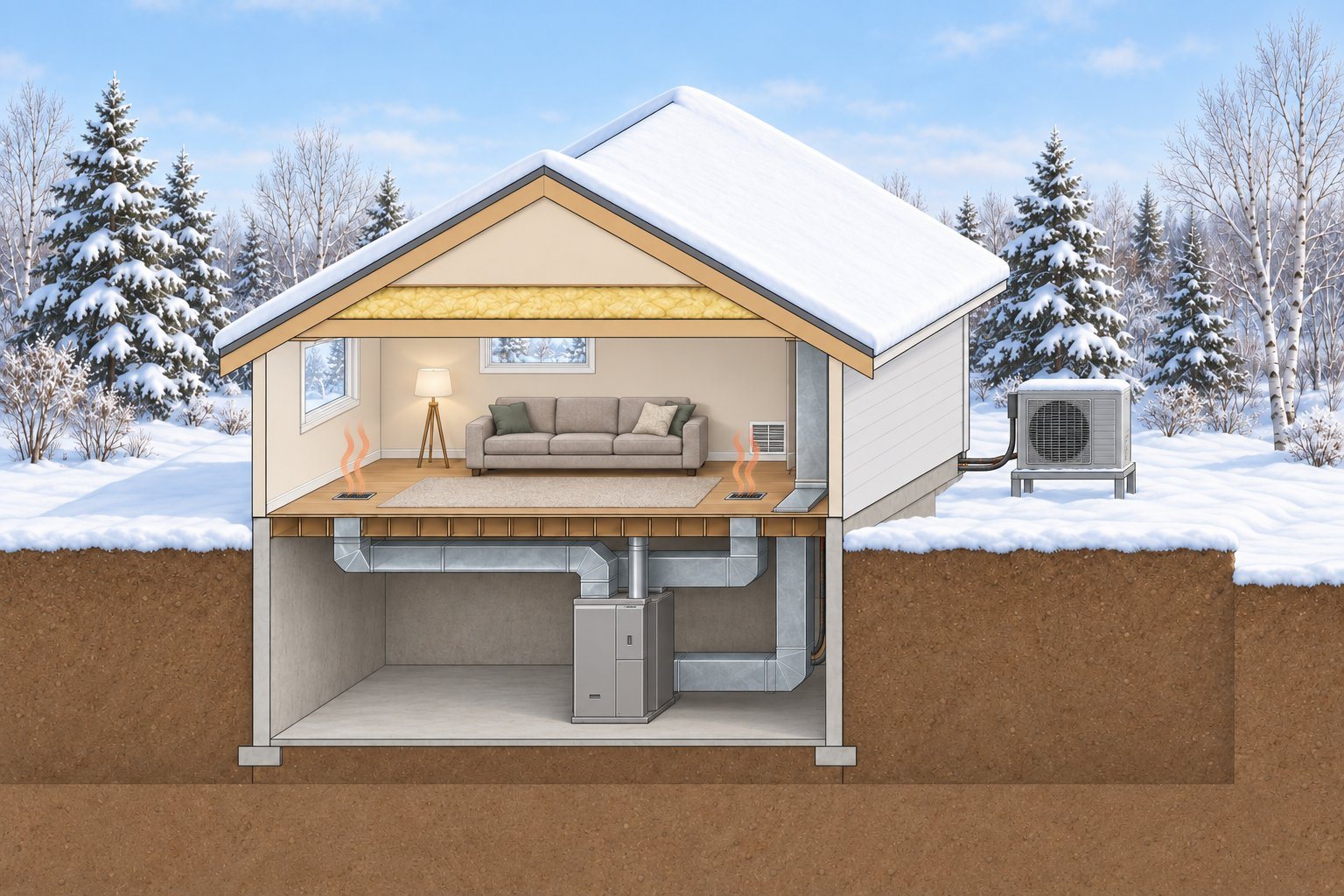
Ducted heat pump
An outdoor heat pump moves heat into the house in winter and out in summer, and an air handler in the basement sends it through ducts, all on electricity.
- Pros: Heats and cools with one system, no fuel deliveries, and cold-climate models keep working well below zero.
- Cons: It usually has electric backup heat for the coldest nights, and like any electric system it needs power to run.
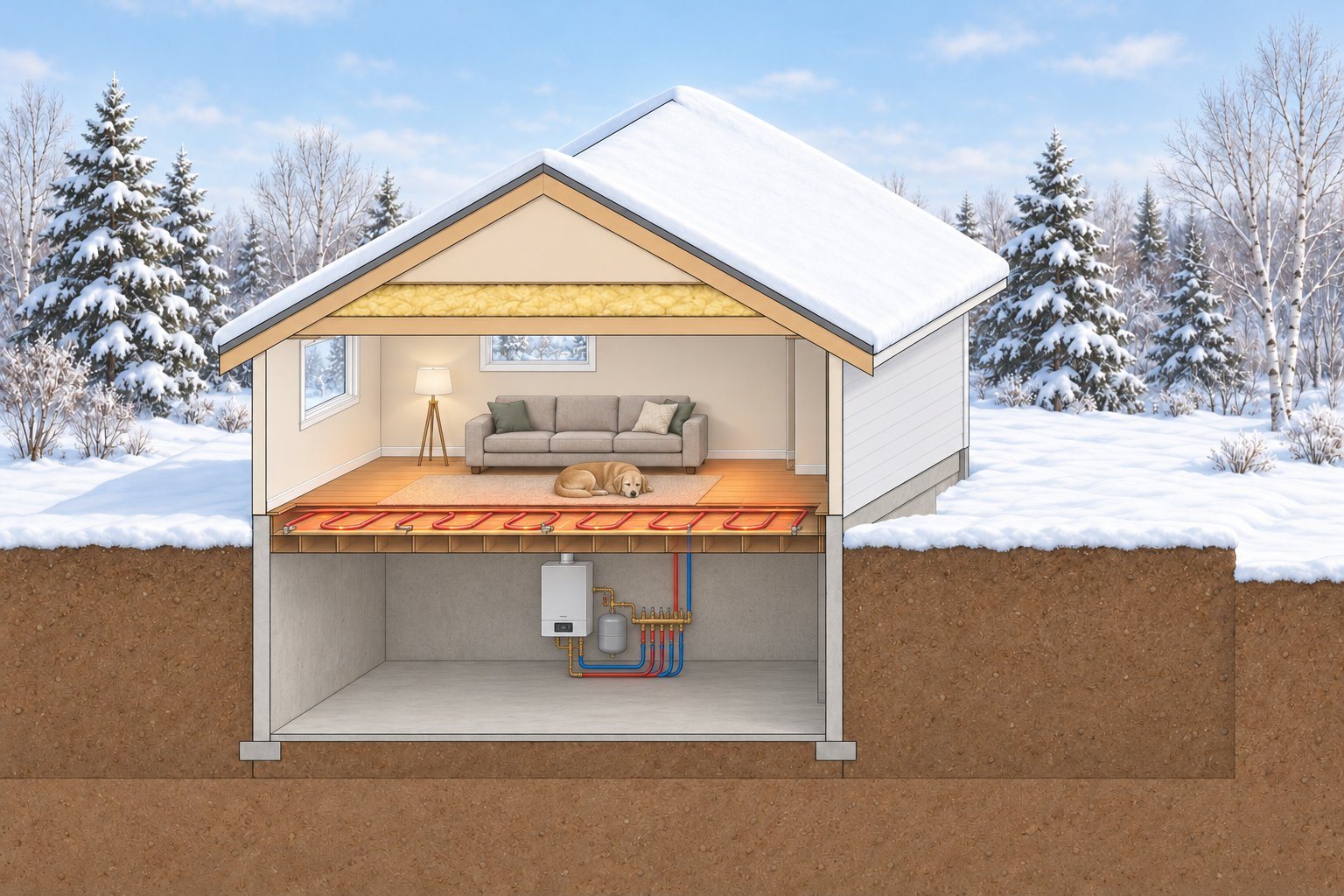
Radiant floor heat
A boiler heats water that circulates through tubing under the floor, so the floor warms the room from below.
- Pros: Quiet, even, comfortable heat with warm floors, and no blowing air or dust. The dog will find the warmest spot.
- Cons: It doesn't cool, so summer needs separate air conditioning or mini-splits, and it's slower to warm up after a setback.
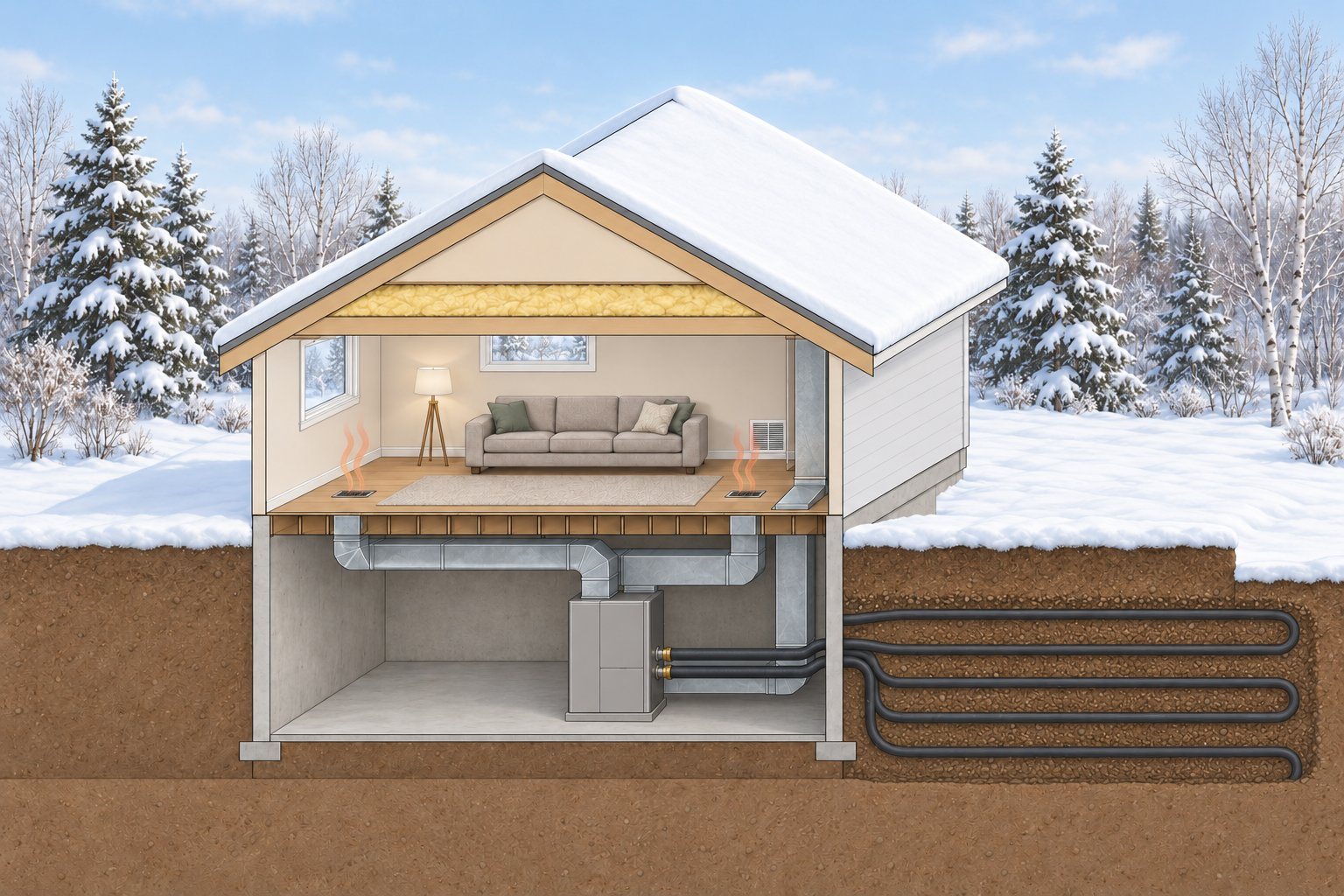
Geothermal
A heat pump trades heat with the ground through loops of pipe buried below the frost line, where the temperature stays steady all year.
- Pros: The most efficient to run, it heats and cools, and nothing sits outside.
- Cons: The highest upfront cost, since the loops have to be dug or drilled.
Recap
| System | Heats | Cools | Upfront cost | Cost to run | Best for |
|---|---|---|---|---|---|
| Furnace with central air | Yes | Yes, with central air | Lowest | Depends on propane or gas prices | Most homes, and anyone who likes a familiar system |
| Ductless mini-splits | Yes | Yes | Low for a room or two, more for a whole house | Low | Additions, garages, bonus rooms and small homes |
| Ducted heat pump | Yes | Yes | Moderate | Low | All-electric homes that want one system |
| Radiant floor heat | Yes | No | Higher | Low to moderate | Comfort, bathrooms, basements and slab floors |
| Geothermal | Yes | Yes | Highest | Lowest | Owners staying long enough to earn it back |
Fresh air and ventilation
Bath and kitchen fans
Vented outside and sized to the room.
Air exchanger
An HRV or ERV swaps stale air for fresh while keeping most of the heat. Well-sealed houses need one.
A generator keeps the heat running when the power goes out. See generators in the electrical guide.
More guides
Outside the house
Systems
Have a question that isn't here?
Send it our way. If we hear it often, it'll likely end up in one of these guides.