 BIRCH COVE BUILDERS
Cabinets and countertops.
Cabinet boxes, doors and countertops.
Framed and frameless cabinets
Framed cabinets have a solid wood frame on the front, and the doors hang on it. Frameless cabinets skip the frame and hang the doors on the box itself. The cost is about the same.
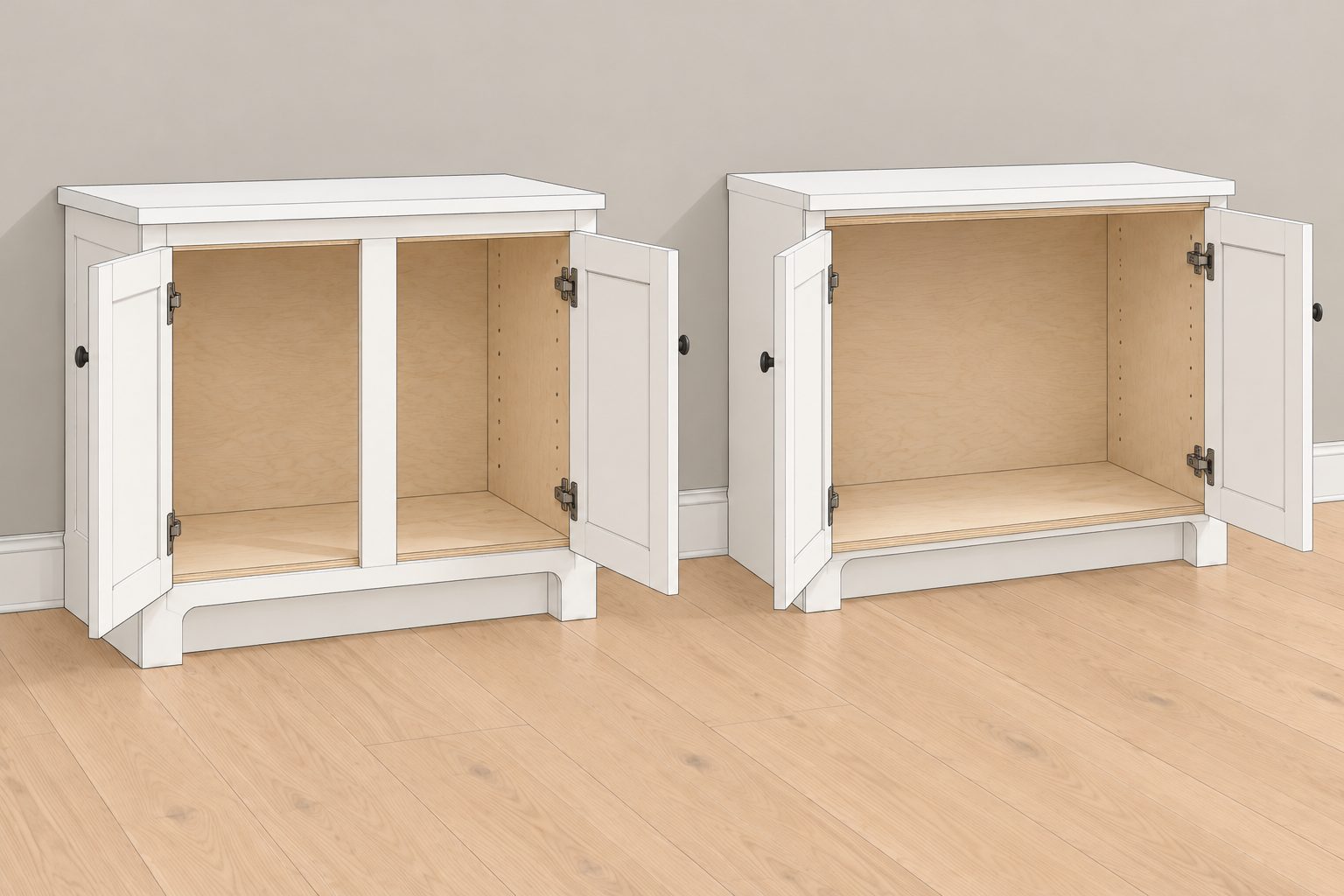
Framed
The traditional American cabinet. Works with every door style, including inset.
Frameless
A clean, modern look, with a little more room inside since no frame narrows the opening.
Real plywood is better than particleboard. It holds screws better and stands up to a leak under the sink.
How the doors sit
On framed cabinets, how the doors sit on the frame sets the style. Frameless cabinets are always full overlay.
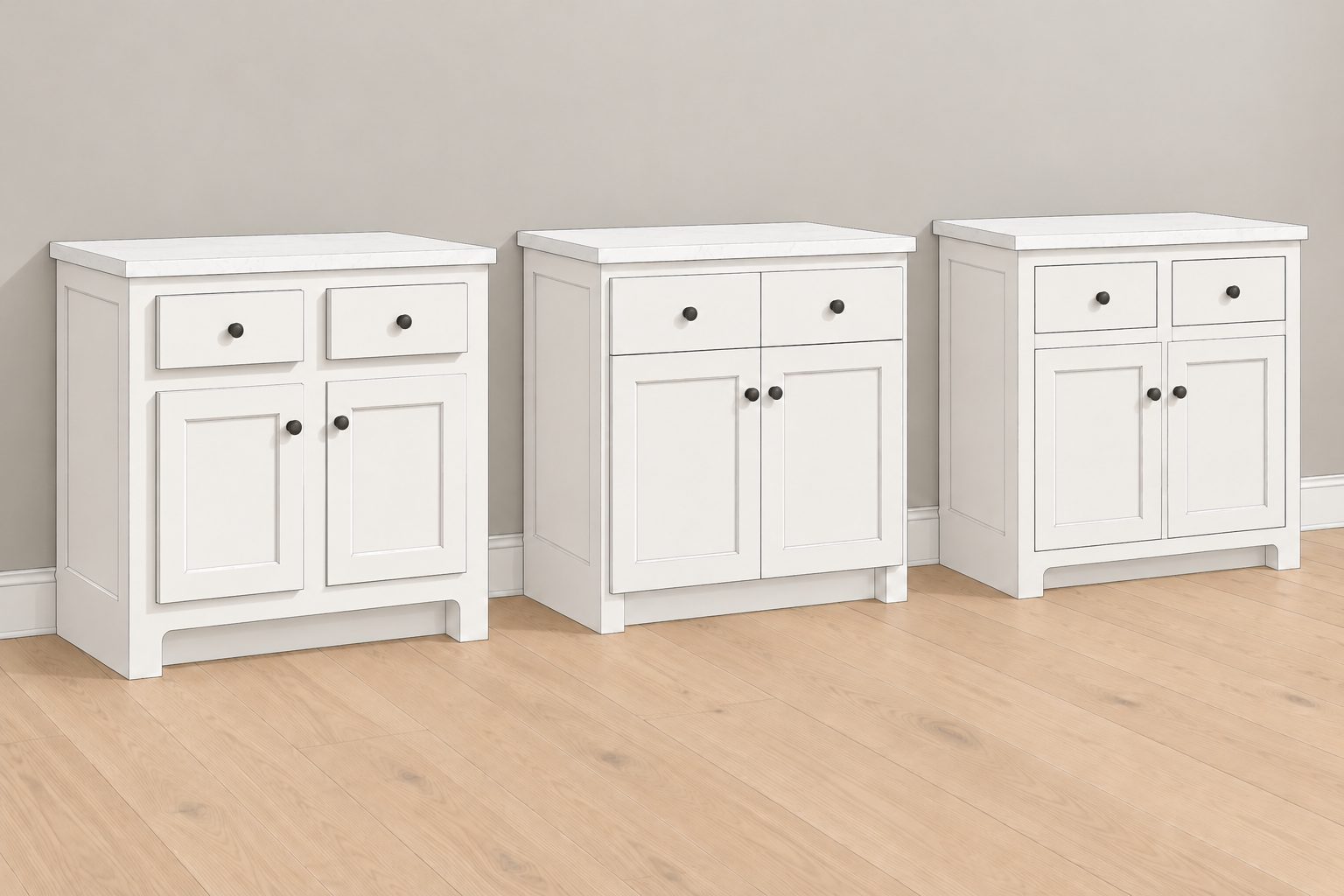
Partial overlay
The frame shows around each door. The most economical, and the look of many older kitchens.
Full overlay
The doors cover nearly all of the frame, with small gaps between them. The most common choice today.
Inset
The doors sit flush inside the frame, like fine furniture. Each one has to be fitted closely, so it costs the most.
Cabinet door styles
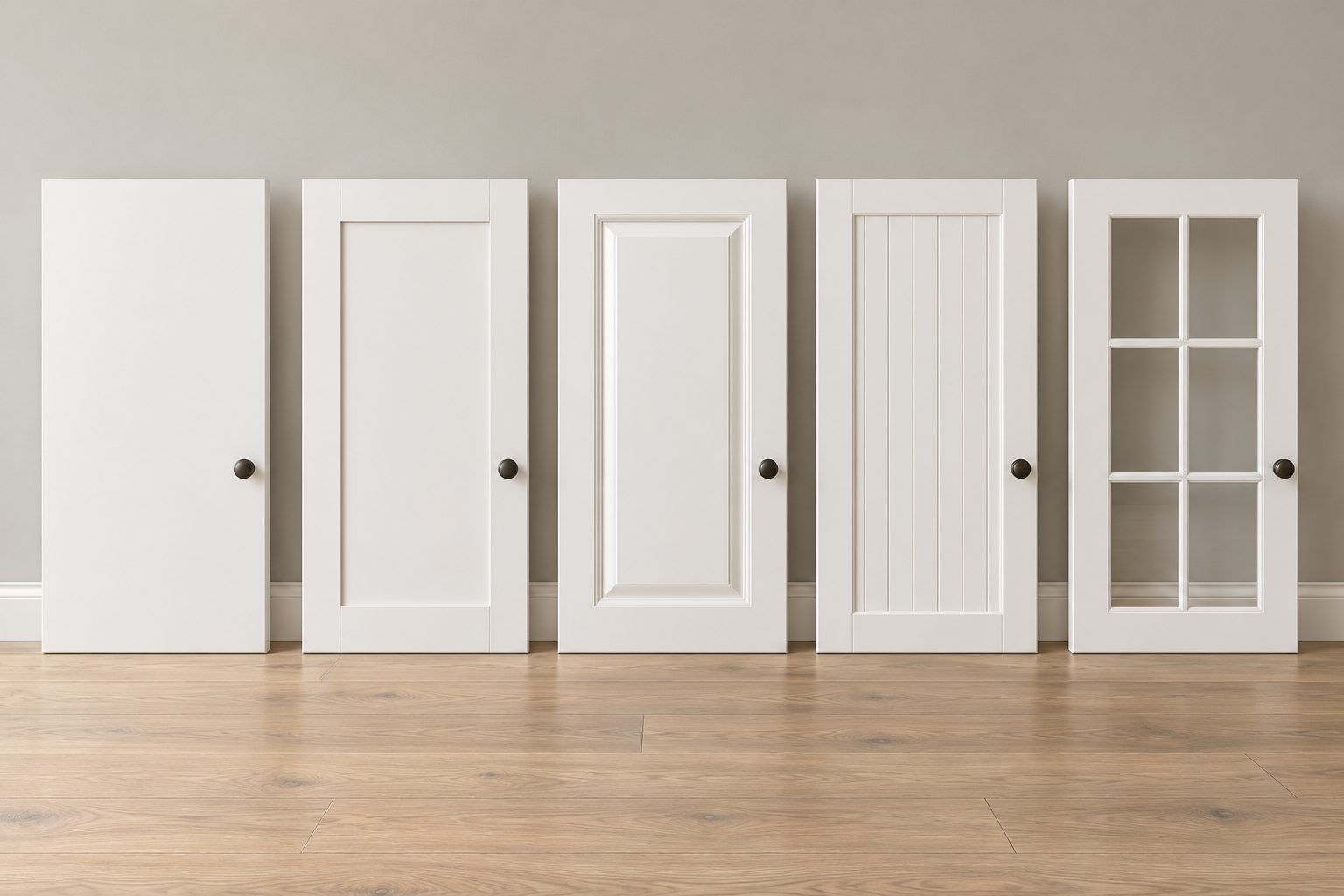
Slab
One flat piece. Painted slabs are economical; slabs in fine wood veneer are a premium look.
Shaker
A plain frame around a flat panel. The most popular door today.
Raised panel
The center panel is shaped and raised. Classic and formal.
Beadboard
A grooved panel for a cottage look.
Glass
Used on a few upper cabinets to show off dishes.
Manufactured or natural stone
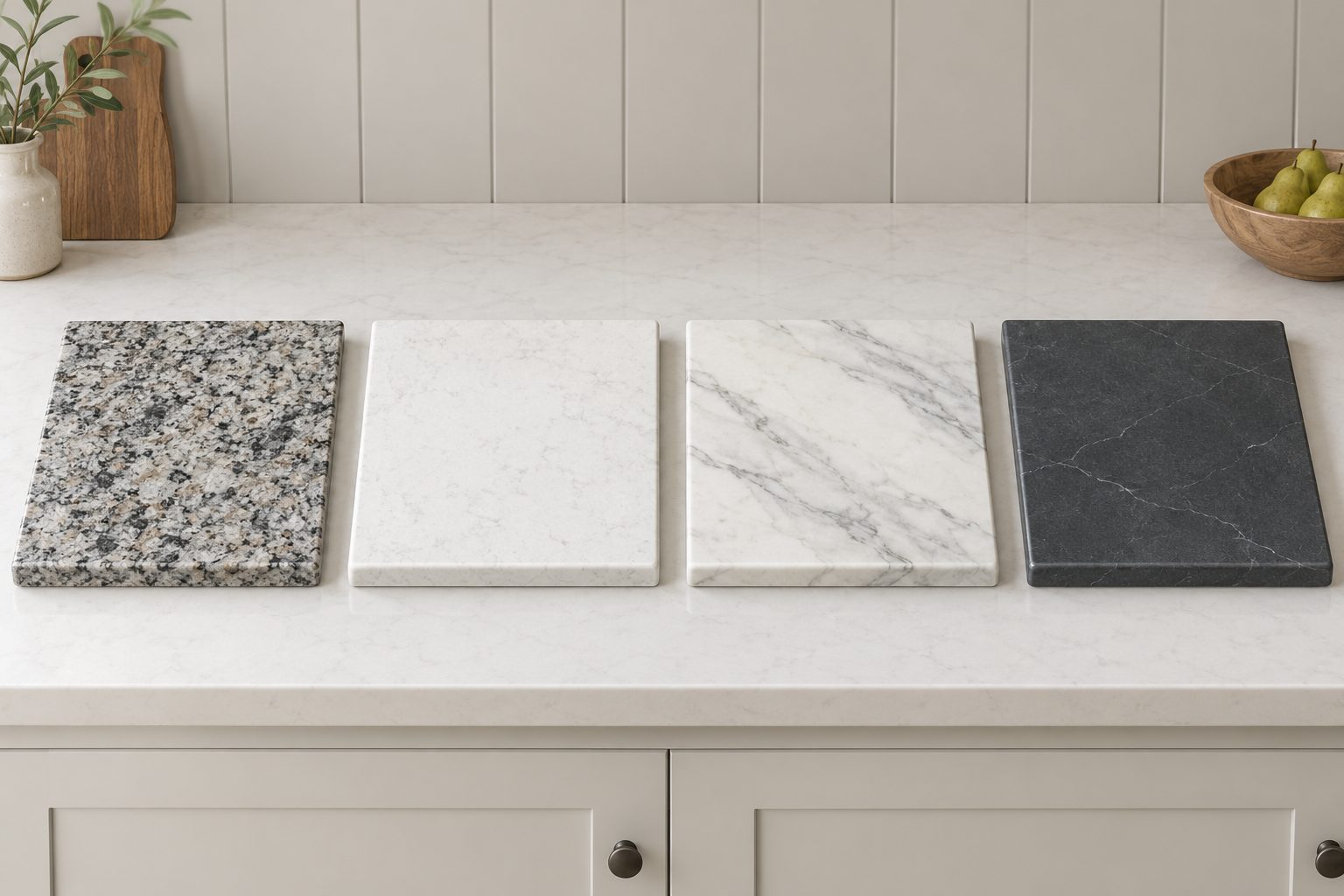
Manufactured, like quartz
Made in a factory, so the slab you get matches the sample you chose. Long runs match end to end, and a piece added years later can usually be matched.
Natural stone
Every slab is different, even from the same block, so you pick out your own slabs at the stone yard. It can't be matched exactly later. That's part of the appeal.
Choose the sink, faucet and cooktop, since the openings are cut to fit them.
Granite
Hard, heat resistant, and not bothered by lemon juice or wine. It comes in a huge range of colors, from common granites that cost less than many quartz colors to rare stones at the top of the range. Most granite should be resealed every so often.
Quartz and quartzite
Similar names, very different materials. Quartz is made from crushed quartz and resin. Quartzite is natural stone, and usually costs more.
| Quartz | Quartzite | |
|---|---|---|
| Look | Consistent, chosen from a sample. | Every slab is different. |
| Heat | Hot pans can scorch it. Use trivets. | Handles heat well. |
| Sealing | Never needed. | Now and then, like granite. |
| Outdoors | Not recommended; sun can fade it. | Fine. |
Soapstone
A soft, smooth stone in grays and charcoals. It doesn't stain, needs no sealing and handles heat. It does scratch, but scratches rub out with mineral oil or fine sandpaper. Oil it now and then to darken it evenly, or let it develop a patina on its own. Its price usually falls between quartz and quartzite.
Beyond the common choices
There are plenty of other choices, from laminate, butcher block and solid surface like Corian, to porcelain slabs, concrete, and natural stones such as marble, slate and limestone.
Product and company names on this page are trademarks of their owners and are used only to identify those products as examples. Birch Cove Builders is not affiliated with or endorsed by these manufacturers.
More guides
Outside the house
Inside the house
Have a question that isn't here?
Send it our way. If we hear it often, it'll likely end up in one of these guides.